Pinguicula | Carnivorous Butterworts
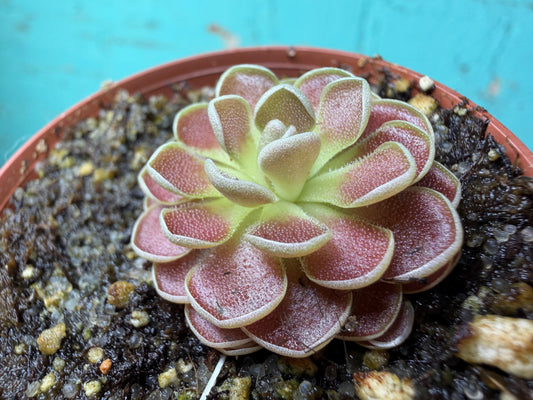
Pinguicula, commonly called butterworts, are small carnivorous plants that can completely change the way you think a carnivorous plant should look. Instead of traps that snap shut or pitchers waiting for insects to fall inside, their leaves do the work. During carnivorous growth, the surface is covered with tiny glands that produce sparkling droplets of sticky mucilage. Small insects such as fungus gnats land on the leaves, become trapped, and provide nutrients to the plant.
Mexican Pinguicula are especially interesting because many have two very different ways of growing. During active carnivorous growth, they produce sticky, glandular leaves that can range from tiny and rounded to broad, ruffled, deeply colored or surprisingly long and narrow. As some varieties move into their seasonal succulent growth, the new leaves emerging from the center become smaller, thicker and more tightly packed. A plant that looked like a carnivorous rosette can gradually transform into something that looks more like a tiny succulent before returning to carnivorous growth again.
That variety is a huge part of what makes this collection so much fun. Depending on the species or hybrid, you can find lime green, yellow, peach, pink, burgundy and purple foliage, along with completely different rosette shapes and flowers held above the leaves on slender stems. Some remain incredibly small while others build much larger rosettes, and many will produce offsets that gradually turn a single plant into a cluster.
They also do not need complicated care to be fascinating plants to grow. Give them the right water, an open mineral-rich substrate and enough usable light, then pay attention to what the center of the plant is producing. Each listing in this collection includes the Rooted growing method along with light placement, watering, substrate, feeding and seasonal-growth information specific to that plant.
Whether this is your first carnivorous plant or the beginning of a much larger Pinguicula collection, these are plants worth slowing down and watching. The newest leaves tell you what phase the plant is entering, the sticky foliage lets you watch carnivory happen right in front of you, and the same little rosette can look remarkably different throughout its growing cycle.
 Sold out