The Rooted Plant Shop
Pinguicula cyclosecta
Each plant is unique. Size, shape, fullness, and variegation will vary.
Couldn't load pickup availability
Buy a Gift
They receive a surprise email
They receive the gift!
To
From:
Occasion:
Message:
Send the Gift Email:
On a specific date:
The recipient will receive your gift email after purchase on the date chosen above.
For gift cards, please forward the redemption code email to the gift recipient separately.
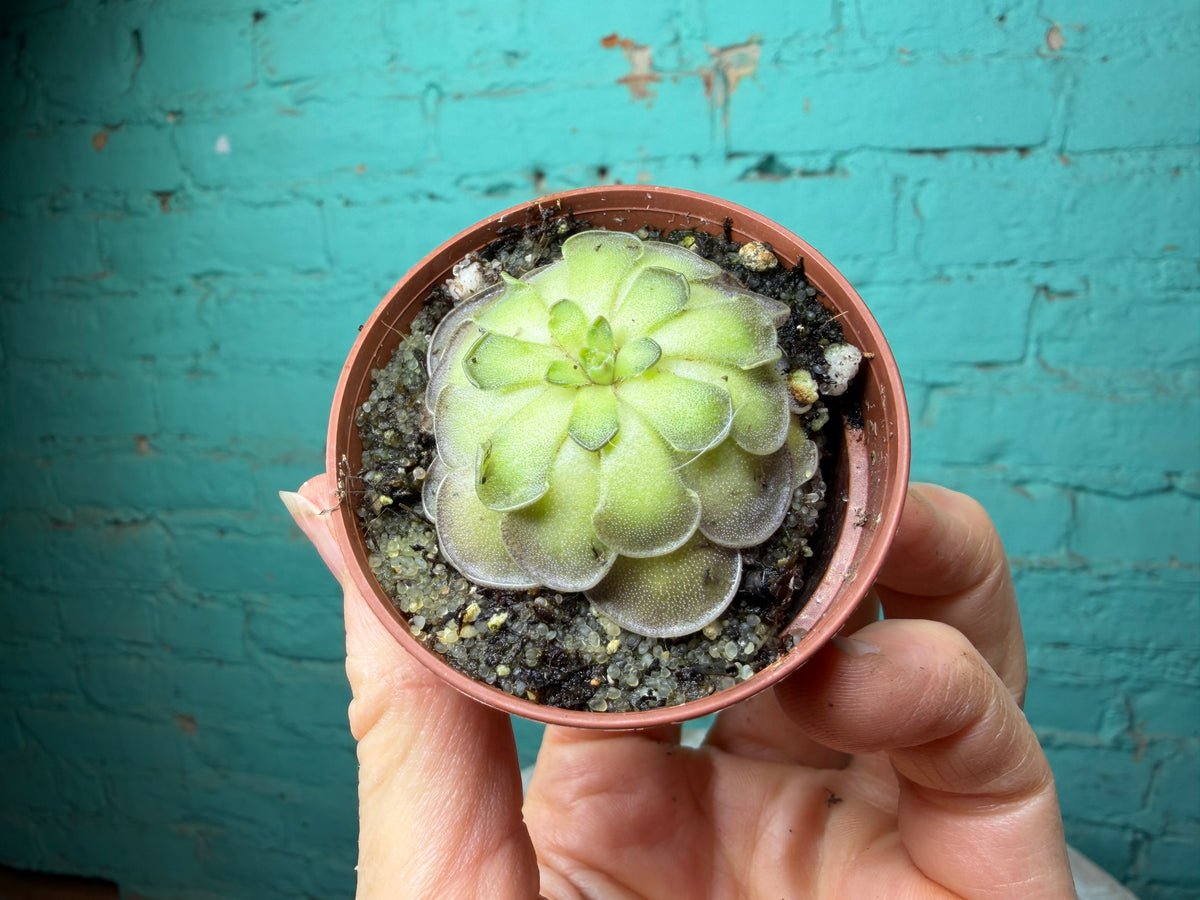
Pinguicula cyclosecta | Cyclosecta Butterwort
Blue-green leaves that can develop remarkable violet, lavender and deep purple coloring make Pinguicula cyclosecta one of the most distinctive Mexican butterworts. Its rounded leaves form a compact rosette, and during carnivorous growth their surface becomes covered in thousands of tiny glistening glands. Those droplets are part of the plant itself, allowing the leaves to capture fungus gnats and other very small insects. As the plant moves through its seasonal growth cycle, it can eventually look like an entirely different little succulent before returning to its broad, sticky carnivorous foliage again.
New leaves develop from the center of the rosette while older leaves gradually move toward the outside. The root system underneath is surprisingly small and extremely shallow, often remaining right near the surface of the substrate. That is completely normal for a Ping. It does not need a deep pot or a large root ball to support the rosette above it. Watch the center of the plant because the newest leaves are your best indication of what the plant is doing now.
For natural light indoors, place it directly in an east-facing window or approximately 1–2 feet from a south-facing window, aiming for approximately 1,000–2,000 foot-candles at the leaves. Foot-candles simply tell you how much light is actually reaching your plant. Strong usable light supports compact growth and can bring out the beautiful blue, violet and purple coloration this species is known for. Color can vary between plants and through different growth stages, so use the shape, size and quality of the newest leaves along with color when judging its light.
Under a grow light, use a full-spectrum 5000–6500K fixture approximately 6–10 inches above the rosette, aiming for 1,000–2,000 foot-candles at the leaves. Keep the light centered over the rosette so the plant receives even coverage. If you are moving it from considerably lower light, increase the intensity gradually and watch the newest growth as it adjusts.
Water when your plant needs watered. For Pings at Rooted, that starts with distilled water, reverse-osmosis water or rainwater rather than mineral-heavy tap water. During active carnivorous growth, wet the plant and upper root zone from above in the morning and again in the evening, allowing the open substrate to remain aerated between waterings rather than keeping the pot continuously standing in water. Because the roots sit so close to the surface, you are keeping moisture available where the plant actually has roots rather than maintaining a permanently saturated pot beneath them.
Give those shallow roots a loose, open substrate. A good starting mix is approximately half organic peat moss and half coarse mineral material, with the mineral portion made from materials such as coarse pumice and natural aquarium sand or fine gravel. The finished mix should look visibly gritty and open while still containing enough peat to hold some moisture. Keep the crown resting at the surface rather than burying the center of the rosette. When you eventually repot and discover a surprisingly tiny root system underneath a healthy plant, don’t be alarmed. That shallow root system is part of how these plants grow.
During carnivorous growth, the sparkling droplets across the leaves are called mucilage. They are supposed to be there. The plant uses them to capture tiny insects and absorb nutrients from its prey. You do not need to wipe the leaves clean or remove every dead fungus gnat you see stuck to them. For additional nutrition, Rooted grows Pings using Schultz Cactus Plus 2-7-7 diluted at one full dropper per ½ gallon of distilled, RO or rainwater. Mix it thoroughly into the water and use the diluted solution during active carnivorous growth. The extremely dilute feeding reaches the carnivorous foliage as the plant is wetted rather than treating the tiny root system like a conventionally fertilized houseplant.
One of the most fascinating parts of growing Pinguicula cyclosecta is watching it enter its succulent phase. The change begins in the center. Instead of continuing to make broad, sticky carnivorous leaves, the plant begins producing smaller, thicker leaves packed much more tightly together. As those leaves replace the older carnivorous foliage, the mucilage diminishes and the plant can eventually look like a completely different little succulent. This is a normal part of its seasonal growth cycle. As the rosette becomes smaller and more succulent, its water use changes too, so follow the plant and reduce moisture as its growth slows rather than continuing to wet a much smaller rosette simply because the calendar says it is watering time.
The plant will show you when that cycle begins changing again. Watch the center. When new leaves begin emerging broader and more glandular, the plant is moving back toward active carnivorous growth. Increase moisture gradually as the rosette becomes active again, and return to its regular carnivorous-growth feeding routine as those sticky leaves develop. You do not need a particular calendar date to make that decision. The type of leaf coming from the center tells you which phase the plant is in.
Flowers rise above the rosette on slender stalks and can be allowed to develop normally. Older outside leaves can also age and decline while healthy growth continues from the center. Look at the direction of the whole plant rather than expecting every old leaf to remain perfect through each seasonal transition.
Success looks different depending on which phase your Ping is growing through. During carnivorous growth, look for a compact rosette producing substantial new leaves with a healthy glistening surface. During succulent growth, look for a healthy, tightly packed center continuing to produce small fleshy leaves. Then watch for those broader sticky leaves to return as the plant becomes carnivorous again. Once you learn to read the center of the rosette, the plant becomes very good at showing you what it is doing and what it needs next.
Share

Let customers speak for us
from 1006 reviewsVery happy with this company and everything I've ever ordered from them. One of my top nurseries to order my plants from! They take amazing care of my future plants 😁
Every plant I get from Mel at Rooted is so happy when they arrive. Such great quality and happy plants!
I don’t even know where to start describing how impressive my experiences have been ordering plants from this shop!
First, my very first order came with a complimentary learning volume on the life cycle and how to eliminate fungus gnats in your plant collection. That alone was worth shopping there. It’s absolutely refreshing to find a retailer who wants your plants to actually be healthy, knowing they could be losing a guaranteed revenue stream simply by not continuing the propaganda or selling the “fixes”.
Next, the plants I ordered were stunningly beautiful, healthy and pest free! They were so well packaged that there was minimal foliage damage, despite the second box actually arriving damaged from transit. My plants were perfect.
The shipping information is well explained before you purchase and the packing materials are very high quality.
Any additional questions I had were answered so quickly and I was pleasantly surprised to discover a bonus plant which I had won in a giveaway nestled in with the ones I purchased!
I’m probably done ordering plants for the season since it is starting to get really cold here in Colorado, but the personal attention, the genuine care and the highest quality plants have earned The Rooted Plant Shop a customer for life in me!
The initial reason I ordered in the first place was because the prices were great. That is still an important thing, I’m frugal and love a deal, but it was so dramatically overshadowed by every other wonderful thing I almost forgot to mention it!
Mell is the best she knows her plants she will also tell u the plant we r looking for if it's for us or not. That's what I love bout her she isn't forcing u to take the plant she is helping u with the plants...
I’ve been wanting a silver dragon and when she got here she was perfect! Thank you Mel!
plants are beautiful and full!! Packing was superb. Super glad ive found this shop. Will be a regular customer!
I ordered the $40 mystery box for a west facing window. It was the first mystery box I had ever ordered and had no idea what to expect. To my joyful surprise, I received a huge dieffenbachia neon panther. She's gorgeous and very healthy. If you're on the fence about buying from this shop, order and have no worries. This is my 4th plant from here and each one has been beautiful and healthy. Definitely recommend this shop!
Always on point! Beyond excellent shipping and quality!
Beautiful plant. I am a sucker for alocasias and this one was on my wish list. I am never disappointed with my plants from The Rooted Plant Shop.
The mystery plant was lovely and far larger than imagined. It was actually 3 plants! A surprise, indeed.
Shipping Protection
Great guide!
Ordered this plant and it was a fast delivery! Beautiful full plant! Way bigger than I expected it to be. Im incredibly happy with it.
The shipping is so fast and the plants arrive healthy and good looking.
Fungus Gnat Guide