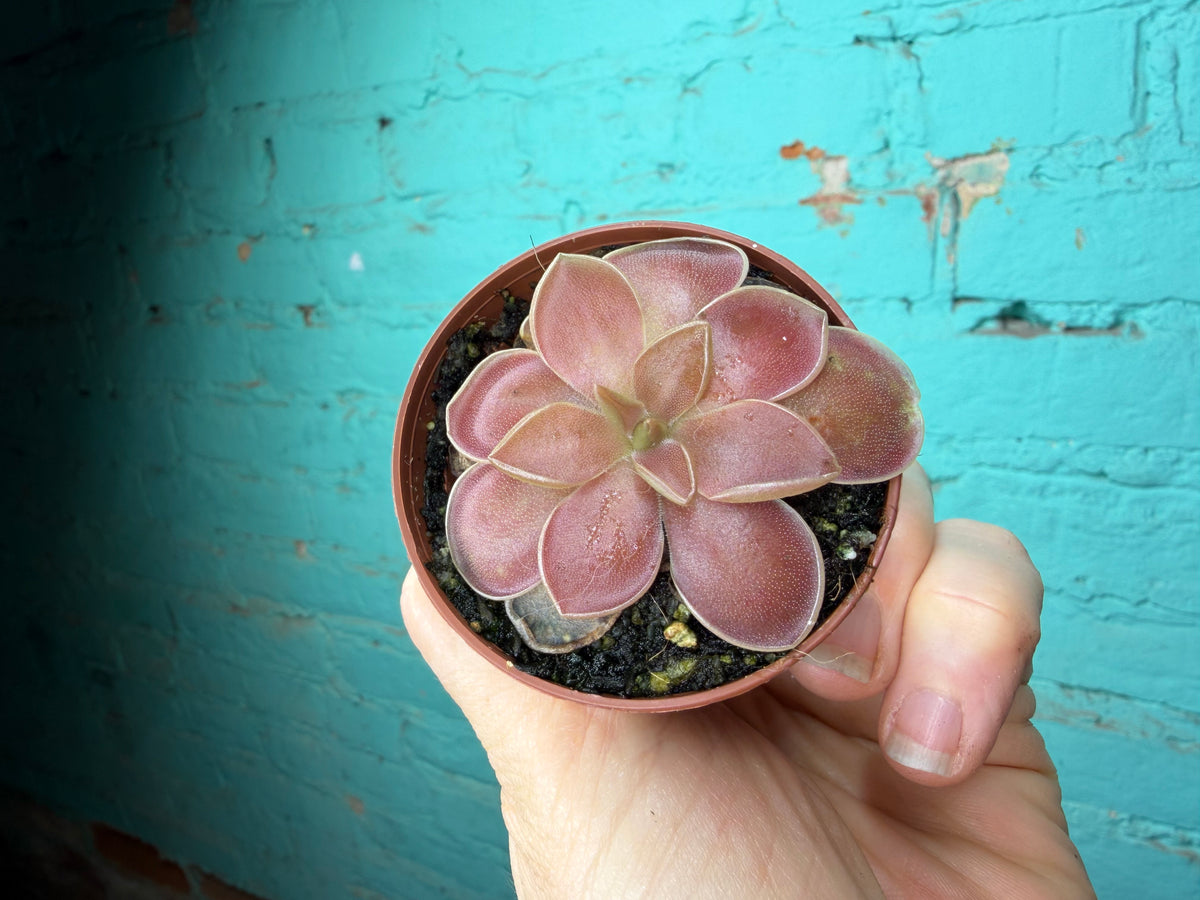
Each plant is unique. Size, shape, fullness, and variegation will vary.
Pinguicula ‘Vorapensis Rosea’ | Vorapensis Rosea Butterwort
Rose-pink foliage is the standout feature of this beautiful butterwort, with broad fleshy leaves capable of developing shades ranging from soft blush and coral pink to much deeper rose under strong usable light. During active carnivorous growth, the surface of each leaf becomes covered in tiny glistening glands that give the rosette its sparkling appearance while capturing fungus gnats and other very small insects. ‘Vorapensis Rosea’ is used as a trade name in cultivation rather than a reliably documented botanical species or registered cultivar name, so the name is best kept as supplied rather than assigning it an unsupported species identity.
This Ping develops as a broad, overlapping rosette with new leaves emerging continuously from the center. Its root system is surprisingly small and extremely shallow, often sitting immediately beneath the surface of the substrate. That is normal even underneath a substantial mature rosette. It does not need a deep pot or a large root system to support the foliage above it. Watch the center of the plant because the newest leaves give you the clearest picture of its current growth.
For natural light indoors, place it directly in an east-facing window or approximately 1–2 feet from a south-facing window, aiming for approximately 1,000–2,000 foot-candles at the leaves. Foot-candles simply tell you how much light is actually reaching your plant. Strong usable light supports a compact rosette and helps this plant develop the rose and pink coloration that makes it so distinctive. Color can shift with light, temperature and growth stage, so use the quality and size of the newest leaves along with color when evaluating the plant.
Under a grow light, use a full-spectrum 5000–6500K fixture approximately 6–10 inches above the rosette, aiming for 1,000–2,000 foot-candles at the leaves. Center the fixture over the rosette for even coverage. If the plant has been growing under considerably weaker light, increase the intensity gradually. Healthy growth is the goal. A Ping can be actively growing and healthy without every leaf reaching the deepest possible shade of pink.
Water when your plant needs watered. For Pings at Rooted, that starts with distilled water, reverse-osmosis water or rainwater rather than mineral-heavy tap water. During active carnivorous growth, wet the plant and upper root zone from above in the morning and again in the evening. The goal is to keep moisture available to the extremely shallow roots while allowing the open substrate to remain aerated rather than leaving the pot continuously standing in water.
Give those shallow roots a loose, open substrate made from approximately half organic peat moss and half coarse mineral material. The mineral portion can include coarse pumice and natural aquarium sand or fine gravel. The finished mix should remain visibly gritty and open while the peat holds some moisture around the shallow root zone. Keep the crown at the surface and avoid burying the center of the rosette. If you eventually repot your Ping and find far fewer roots than you expected, that small shallow root system is normal.
During carnivorous growth, the sparkling droplets covering the leaves are called mucilage. The plant produces them to trap tiny insects and absorb nutrients from its prey. Fungus gnats caught across the leaves can simply remain there while the plant uses them. There is no need to wipe or clean the leaves. For additional nutrition, Rooted grows Pings using Schultz Cactus Plus 2-7-7 diluted at one full dropper per ½ gallon of distilled, RO or rainwater. Mix it thoroughly into the water and use the diluted solution during active carnivorous growth so nutrition reaches the carnivorous foliage as the plant is wetted.
As this Ping moves into its succulent phase, watch the center of the rosette. New leaves begin becoming smaller, thicker and more tightly packed than the broad carnivorous leaves surrounding them. The sticky mucilage diminishes as succulent foliage replaces the older carnivorous growth, and the plant can eventually look remarkably different from the pink, sticky rosette you originally brought home. This seasonal transformation is part of growing Mexican-type Pinguicula. As the rosette becomes smaller and its growth slows, its water use changes too. Reduce moisture along with the plant rather than continuing to wet the smaller succulent rosette at the same rate it used during active carnivorous growth.
The return to carnivorous growth begins in the center as well. New leaves start emerging broader and develop their glandular, sticky surface again. Gradually increase moisture as active growth returns and resume the regular carnivorous-growth feeding routine as those leaves develop. Let the plant’s newest growth guide the transition rather than relying on a particular date.
Flowers can rise well above the foliage on slender stalks and can be allowed to bloom normally. Older outside leaves may gradually decline as healthy new foliage continues from the center, especially while the plant is changing growth forms. Look at what the center is building before judging the plant by an older outside leaf.
Success looks like a healthy rosette continuing to produce new growth appropriate for its current phase. During carnivorous growth, look for substantial leaves, a glistening surface and the beautiful rose coloration this Ping is grown for. During succulent growth, look for a healthy, compact center producing small fleshy leaves. As broader sticky leaves eventually return, the plant is showing you that another cycle of carnivorous growth has begun.