Direction Of Light
Start with Your Light
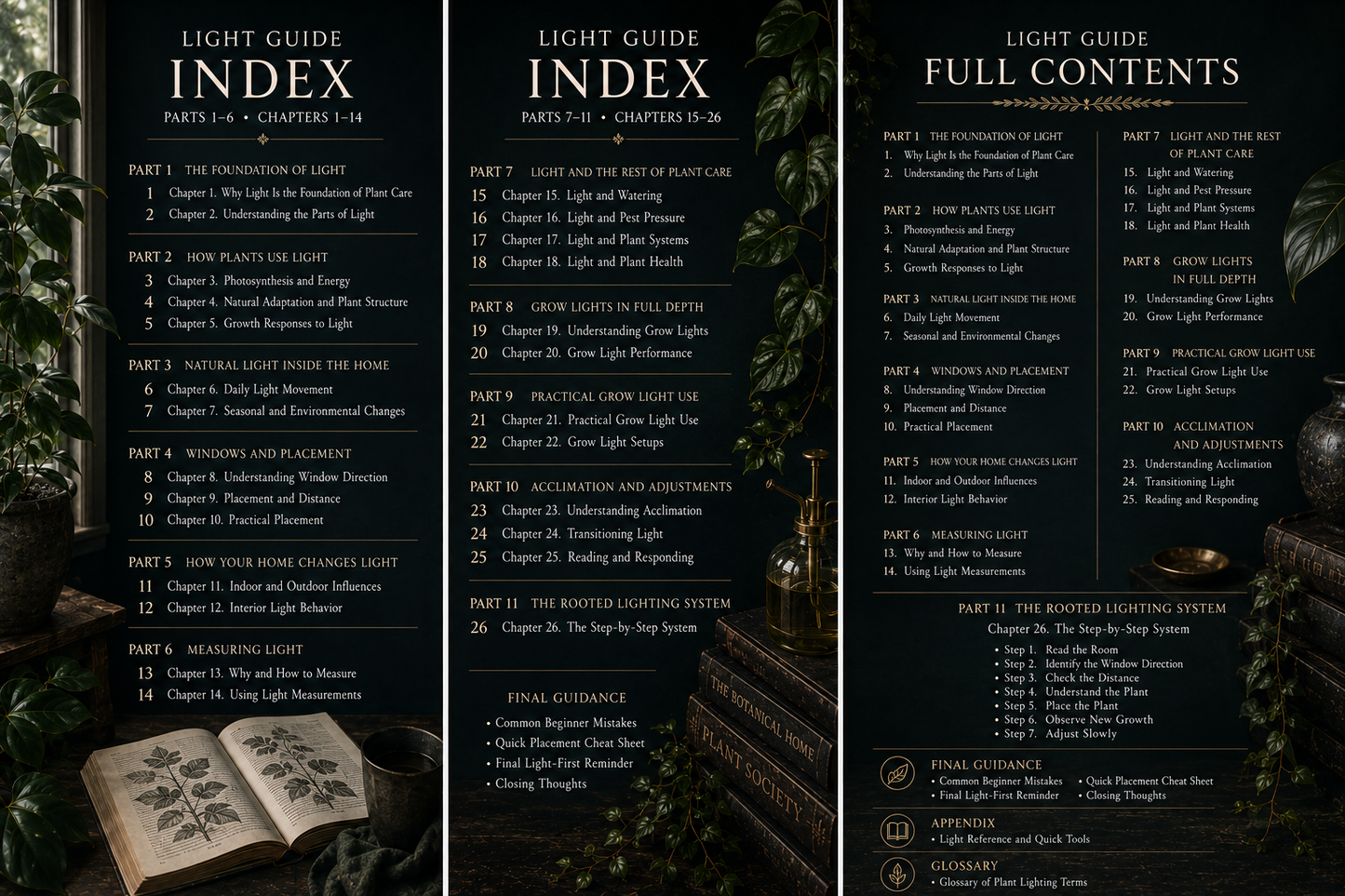
Plant care gets easier when your plant matches your light. Most people focus on watering schedules or what a plant “should” need, but plants respond to the environment they’re in. The biggest factor in that environment is light, and more specifically, the direction your light comes from.
What “direction of light” actually means
Light from a window is not the same in every room. A north-facing window gives soft, consistent light. An east-facing window gives gentle morning sun. A south-facing window provides the strongest, most consistent light throughout the day. A west-facing window brings brighter afternoon light with more heat. This difference changes how much energy your plant receives.
Understanding light intensity (foot-candles)
SHOP EAST
SHOP NORTH
SHOP SOUTH
SHOP WEST
Light is not just direction, it is intensity. Foot-candles measure how much usable light actually reaches your plant. Outdoors, light can reach 10,000+ foot-candles, but inside your home it drops quickly depending on distance from the window. Right at a bright window you may have 1,000–3,000 foot-candles. At 3–5 feet away, that can drop to 200–800. Across the room, it can fall below 100. This is why placement matters so much. Even small shifts in distance can completely change how your plant grows and how often it needs water.

Why this changes everything
Light controls how your plant grows, how quickly it uses water, and how it responds over time. In lower light, your plant grows slower and uses water more slowly. In stronger light, your plant grows faster and dries out more quickly. When a plant doesn’t get enough light, it may stretch, lean, or produce smaller leaves. When it gets the right amount, growth becomes more stable, leaves are stronger, and the plant holds its shape.
How light affects watering
Watering is not a schedule. It is a response to how quickly your plant is using water, and that speed is driven by light. A plant in stronger light will need water more often because it is actively growing and using energy. A plant in lower light will need water less often because it is moving more slowly. This is why the same plant can need completely different care in two different homes.
Using grow lights to support your plants
If your natural light is limited, you can support your plants with a grow light. Look for full-spectrum lights in the 5,000K–6,500K range to mimic natural daylight. Position the light about 10–12 inches above your plant so it receives consistent coverage. Under a grow light, you can create a stable environment where your plant receives steady light every day, which makes watering and growth much more predictable. Grow lights are especially helpful for north-facing spaces or areas further away from windows.
Why placement matters
Distance from the window changes everything. A plant placed 1–2 feet from a window receives significantly more light than a plant across the room. Even moving a plant a few feet can change how it grows and how often it needs water. If something feels off, adjust placement before anything else.
What happens when your plant matches your light
When your plant is in the right light, everything becomes easier. Watering becomes more predictable, growth becomes more consistent, and the plant shows clearer signals. You’re no longer guessing, you’re responding.
Start by choosing your light below:
-
Mystery Plant Subscription 4”
Regular price $25.00 USDRegular priceUnit price per -
Rooted Collection Subscription 4”
Regular price $30.00 USDRegular priceUnit price per -
Rooted Collection Subscription 8-10”
Regular price $100.00 USDRegular priceUnit price per -
Rooted Collection Subscription 6”
Regular price $55.00 USDRegular priceUnit price per


Let me help you build your collection.
Your subscription should be the easy part. Subscribe once, and each month I’ll personally choose a 4" plant from the shop and send it your way. No credits to keep track of, no monthly shopping, and no extra order to place. Your only job is to open the box and see what I picked for you.
Direction of Light
-

East Facing
EAST-FACING PLANTS East-facing windows provide morning sun, with light that is strongest...
-

North Facing
NORTH-FACING PLANTS North-facing windows generally provide the lowest and most consistent natural...
-

West Facing
WEST-FACING PLANTS West-facing windows provide stronger afternoon and early evening light, often...
-

South Facing
SOUTH-FACING PLANTS South-facing windows generally provide the strongest and longest-lasting natural light...



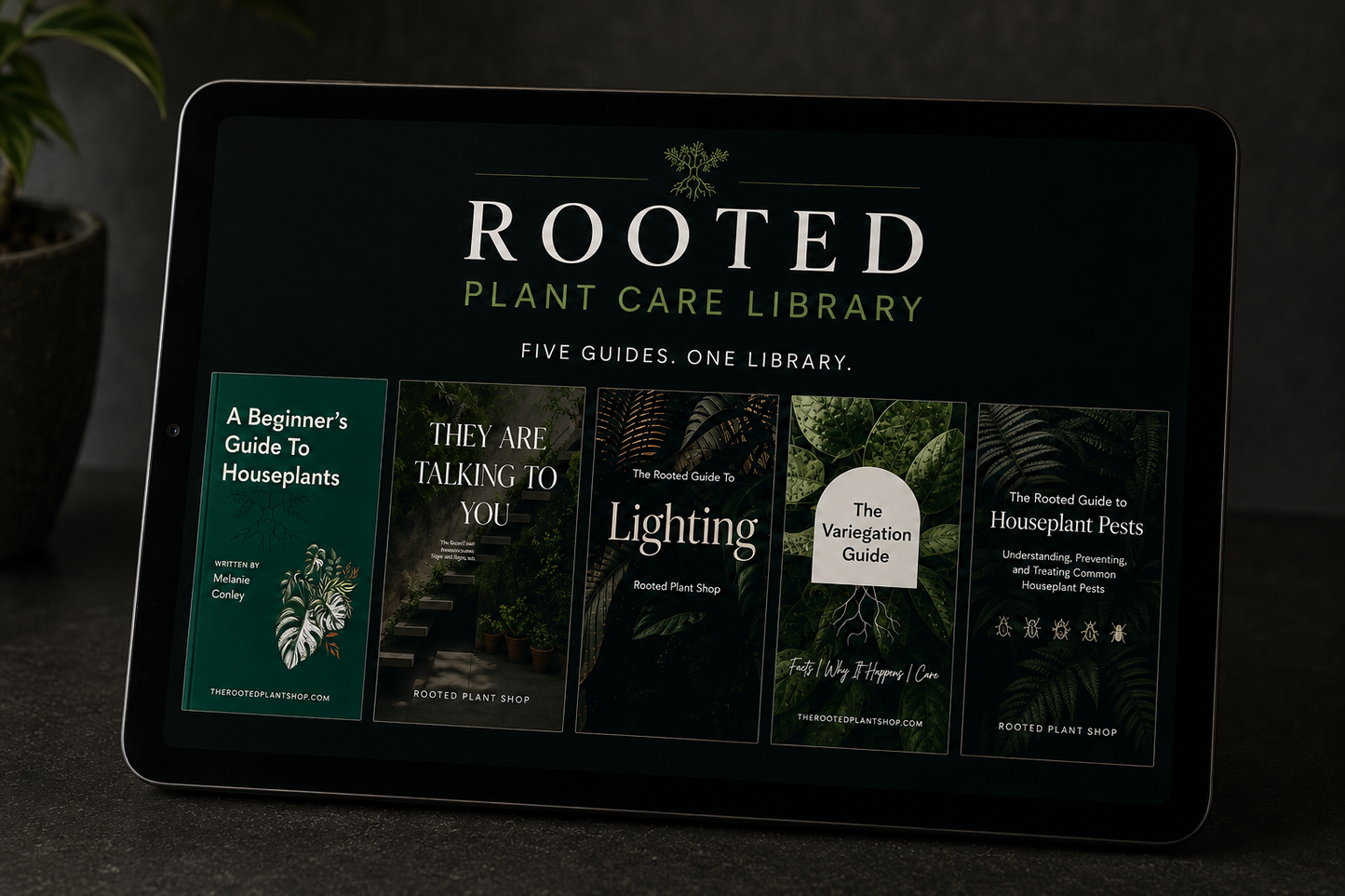
They Are Talking To You
Your plants are always communicating. These guides teach you how to recognize the signals so you can understand what your plant is telling you and respond with confidence.