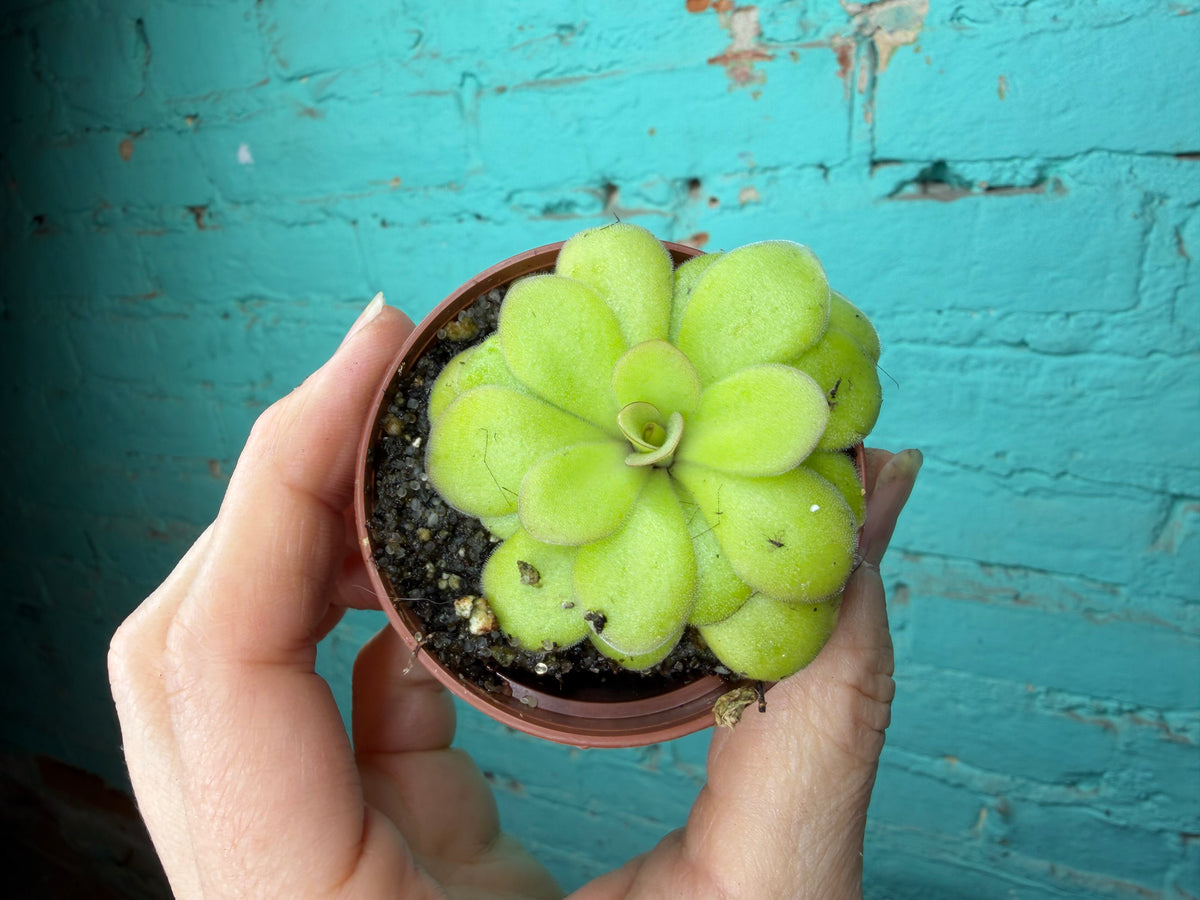
Each plant is unique. Size, shape, fullness, and variegation will vary.
Pinguicula agnata × potosiensis | Agnata × Potosiensis Butterwort
A broad, almost succulent-looking rosette of luminous green leaves makes this Mexican butterwort hybrid especially striking even before you notice that every leaf is covered in tiny carnivorous glands. The fleshy, overlapping leaves create a substantial rosette, while their glistening surface produces the sticky mucilage used to capture fungus gnats and other very small insects. This hybrid combines Pinguicula agnata and Pinguicula potosiensis, bringing together two Mexican species with naturally fleshy foliage and compact rosette growth.
It grows outward from a central growth point, producing broad new leaves that gradually overlap the older foliage beneath them. The agnata influence can contribute to the wide, rounded leaves and substantial size of the carnivorous rosette. It stays low and spreading rather than developing a stem or vine, and its root system remains surprisingly small and fine compared with the amount of foliage above it. Flowers are produced on slender stalks that rise well above the leaves.
For natural light indoors, place it directly in an east-facing window or approximately 1–2 feet from a south-facing window. It prefers approximately 1,000–2,000 foot-candles at the leaves. Foot-candles simply tell you how much light is actually reaching your plant. Strong usable light helps maintain a broad, compact rosette with substantial leaves. Depending on conditions and the individual plant, the foliage may develop warmer blush or pink tones, but a healthy green rosette is completely normal. Color is only one response to light, so use the size, spacing and quality of the newest leaves to judge the plant.
Under a grow light, use a full-spectrum 5000–6500K fixture approximately 6–10 inches above the rosette, aiming for 1,000–2,000 foot-candles at the leaves. Position the fixture directly over the center so the entire rosette receives useful light. If the plant has been growing at a lower intensity, increase its light gradually. The goal is a compact plant continuing to produce broad, substantial leaves rather than trying to force a particular foliage color.
Water when your plant needs watered. While it is actively producing broad, glandular carnivorous leaves, keep moisture consistently available without keeping the crown buried or stagnant. Use distilled water, reverse-osmosis water or rainwater to avoid the mineral accumulation that can come with harder tap water. Its water use can change as growth slows or the type of leaves being produced changes, so watch the plant itself rather than keeping the pot at exactly the same moisture level throughout the year.
The fine root system needs a loose, nutrient-poor substrate with plenty of air. A mineral-heavy butterwort mix using materials such as pumice, perlite, coarse sand and other porous mineral components works well. A shallow pot is plenty for the small root system. Keep the crown resting at the surface with the center of the rosette exposed, and avoid surrounding those fine roots with rich conventional potting soil.
Watch the center of the rosette and the newest leaves. Broad new leaves with a sparkling glandular surface tell you the plant is actively producing carnivorous growth. Older leaves around the bottom edge can gradually decline as the center continues building new ones. If growth slows or the center begins producing noticeably smaller, thicker leaves, expect its water use to slow with it and adjust accordingly rather than assuming it needs the same amount of water year-round.
Success looks like a broad, well-filled rosette with substantial overlapping leaves and steady new growth emerging from the center. The tiny droplets covering the leaves are part of the plant’s carnivorous machinery, and seeing small insects caught on that surface means those leaves are doing exactly what they were built to do. Follow the newest growth, give the fine roots moisture and air in the right balance, and let the rosette show you when its growth and water use begin to change.