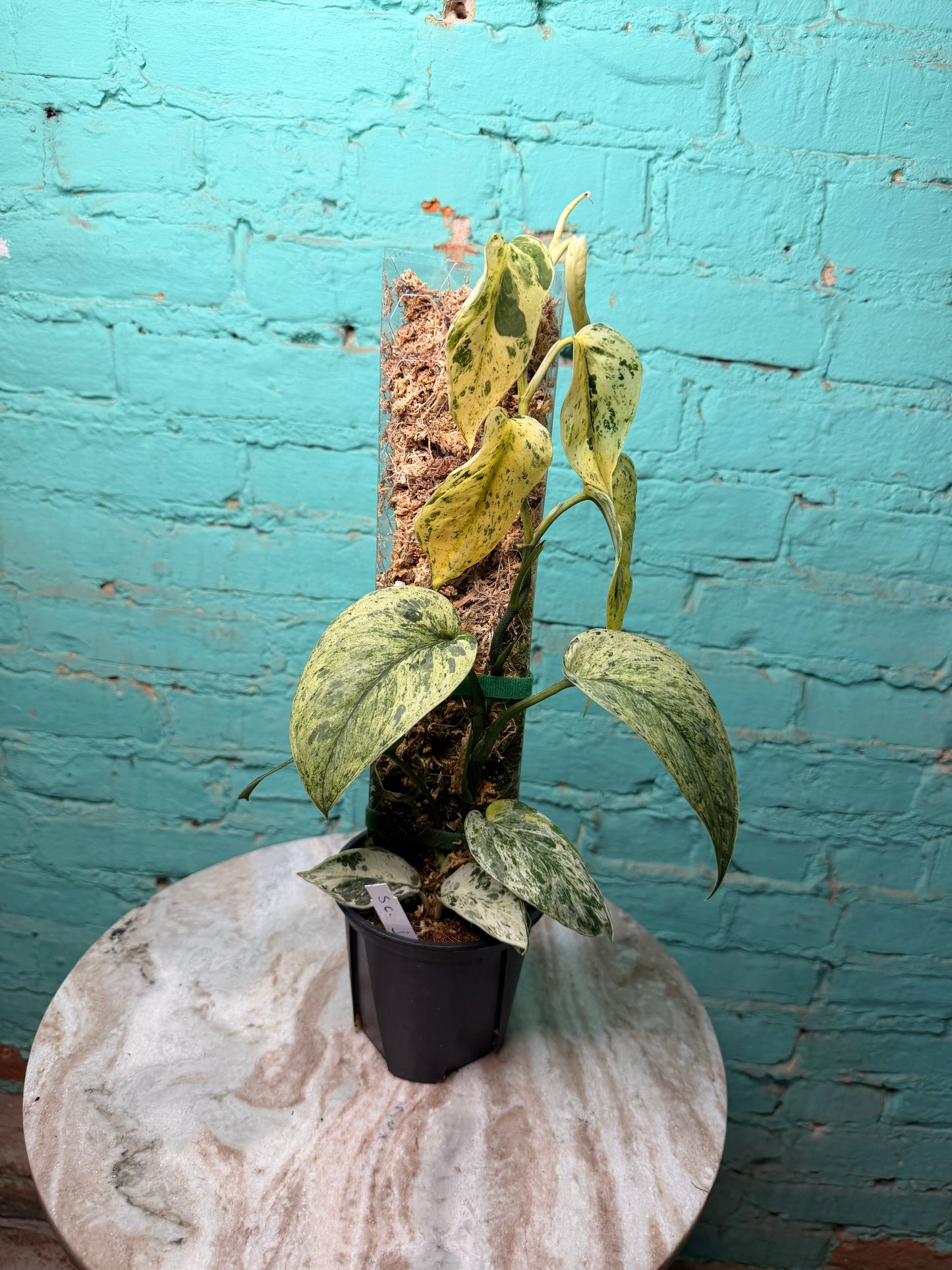
Each plant is unique. Size, shape, fullness, and variegation will vary.
Couldn't load pickup availability
Scindapsus ‘Jade Satin’ Aurea Variegated is an exceptionally rare climbing aroid prized for its thick, heavily textured leaves splashed with brilliant shades of golden yellow, lime, and green. Native Scindapsus species originate from the tropical rainforests of Southeast Asia, where they climb trees beneath the forest canopy using aerial roots. The deeply quilted foliage gives each leaf a rich, satin-like texture, while the aurea variegation ensures no two leaves are exactly alike. As the plant matures on a moss pole, the leaves can increase dramatically in size, developing a bold, tropical appearance that is difficult to achieve when allowed to trail.
Place Scindapsus ‘Jade Satin’ Aurea Variegated within 1–3 feet of an east-facing or south-facing window. Because the variegated portions of the leaves contain less chlorophyll, brighter conditions help maintain healthy growth and vibrant coloration. Under grow lights, use a full-spectrum bulb in the 5000K–6500K range. High-output lights should be positioned 8–12 inches above the foliage, while medium-strength lights work best at 10–14 inches. Keeping the plant attached to a moss pole allows the aerial roots to anchor and encourages significantly larger, more mature leaves with tighter internodes.
Water when the root zone is approaching dryness, never on a schedule. Use a chopstick, moisture meter, or clear nursery pot to monitor moisture levels throughout the pot before watering. A chunky mix of equal parts succulent soil, coarse orchid bark, and perlite provides the drainage and airflow needed for healthy root development. Keep the moss pole slightly moist during active growth to encourage the aerial roots to grow into it, helping the plant climb naturally and produce progressively larger foliage. Browning on the yellow variegation can occur if the plant becomes too dry or receives inconsistent watering, while smaller leaves and longer internodes are often signs that it would benefit from stronger light or a more consistently moist climbing support.
Fantastic prices, fast shipping, and excellent packaging to keep your new plant baby safe. I would highly recommend purchasing from here if you’re looking for a new plant.