Why Is My Plant Dying, How To Fix It.

Why Your Plant Is Dying (And How to Fix It)

If your plant is struggling, I want you to slow down for a second. This is not about having a green thumb, and it’s not random. Your plant is responding to something in its environment, and most of the time that comes back to light.

I see this all the time. Plants that aren’t growing, leaning toward the window, dropping leaves, or staying wet longer than they should. Those are not problems to panic over, they’re signals. Your plant is telling you something, you just haven’t learned how to read it yet.

Start with your light.

Light determines how your plant grows, how much water it uses, and how it behaves over time. When a plant is in lower light than it needs, everything slows down. Growth slows, water use slows, and the soil stays wet longer than it should. That’s when you start seeing yellowing leaves, soft stems, or what feels like “overwatering,” when really it’s a light issue.

When a plant is in stronger light, the opposite happens. It grows faster, uses water more quickly, and needs more consistency. Same plant, completely different behavior depending on placement.

This is why I don’t teach schedules. Beginner’s Guide 

Watering is not something you follow on a calendar. It’s something you respond to. Your plant is constantly adjusting based on its environment, and light is what drives that. If your soil is staying wet too long, don’t water less, look at your light. If your plant is drying out quickly, don’t panic, look at your light.

Before you change anything else, move your plant.

Bring it closer to the window. Even a difference of one to two feet can change everything. I always tell people, placement is the first fix. Not watering, not fertilizer, not repotting. Placement.

And then watch.

This is where signs and signals matter. Your plant is always communicating. New growth slowing down, leaves getting smaller, stems stretching, color changing, these are all ways your plant is responding to its environment. You don’t need to guess, you need to notice patterns.

If your space doesn’t give you enough natural light, that’s okay. You can create it. A full spectrum grow light in the 5,000K–6,500K range, placed about 10–12 inches above your plant, will give it consistent energy and make everything more predictable. This is especially helpful in north-facing spaces or deeper rooms.

Once your plant matches your light, everything starts to fall into place. Watering becomes easier, growth becomes more consistent, and the plant starts giving you clearer signals. You’re not constantly trying to fix something, you’re responding to what’s actually happening.

If you’re not sure where to start, start with your light.

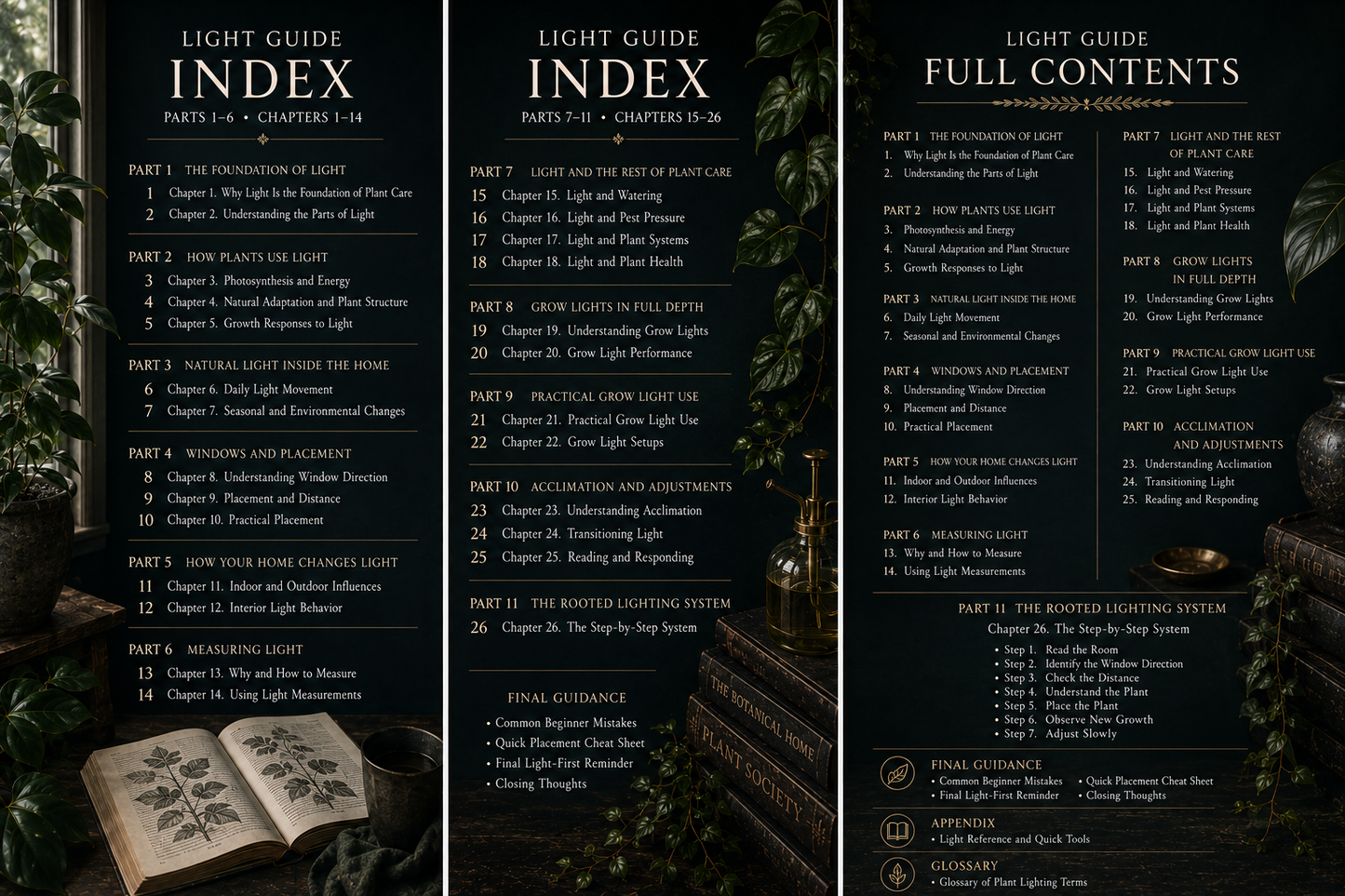
Start with your light → Lighting Guide coming soon! 

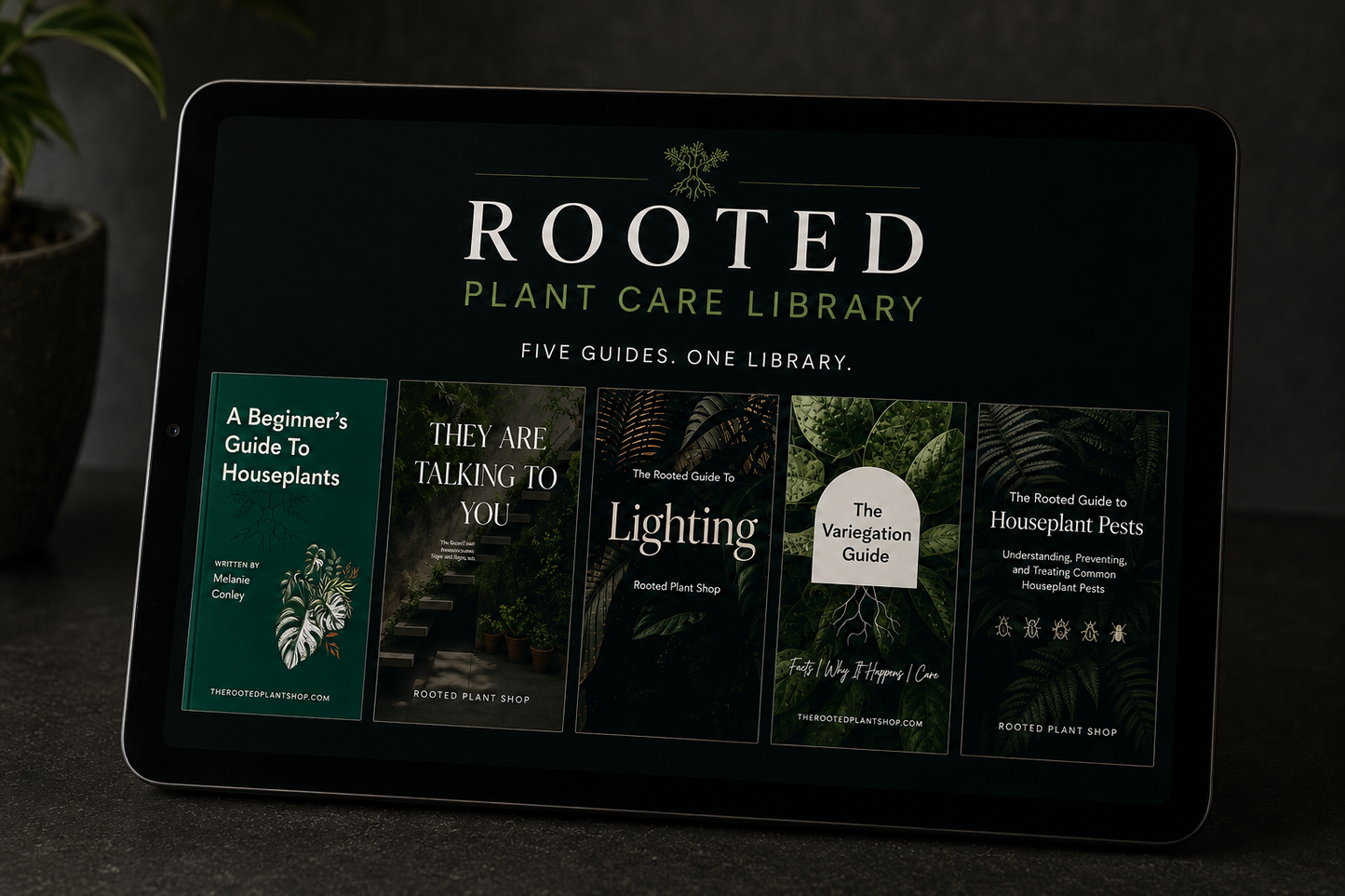
And if you want to feel confident instead of guessing, the Plant Care Guides walk you through this step by step. Lighting, watering, pests, and plant signals, all explained in a way that actually makes sense so you can understand what your plant is doing and why.

They Are Talking To You

Your plants are always communicating. These guides teach you how to recognize the signals so you can understand what your plant is telling you and respond with confidence.

Button label

Contact form