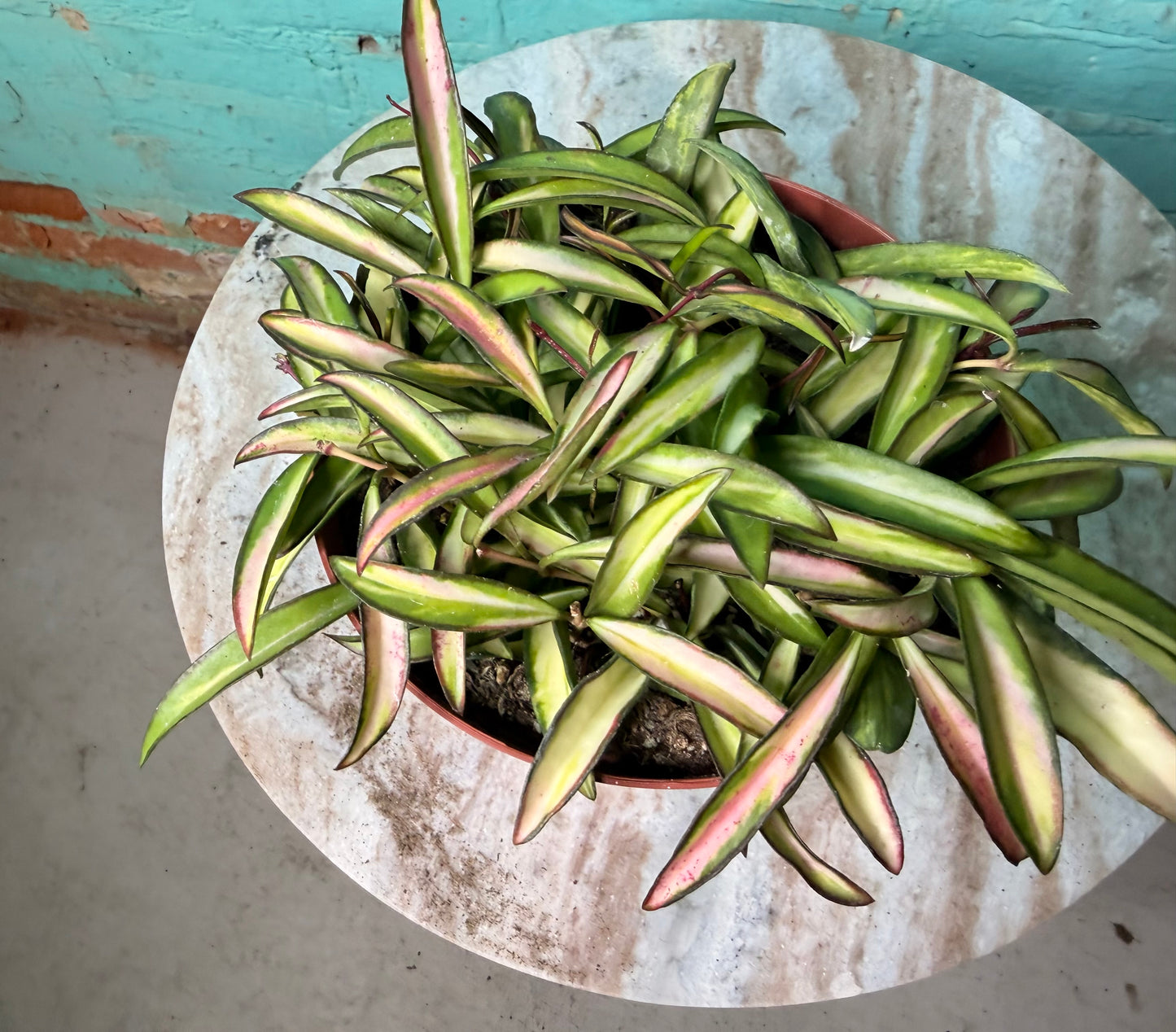
Each plant is unique. Size, shape, fullness, and variegation will vary.
Couldn't load pickup availability
Hoya wayetii ‘Variegata’ is a tropical epiphytic vine native to the Philippines through its Hoya wayetii lineage. It is prized for its long, narrow leaves edged and marbled with shades of cream, yellow, and green, often developing pink to deep red margins when grown in bright light. As an epiphyte, it naturally grows attached to tree branches where its roots receive excellent airflow. Mature plants reward consistent care with clusters of fuzzy, star-shaped flowers that are deep burgundy with golden centers and produce a sweet caramel-like fragrance.
Place Hoya wayetii ‘Variegata’ within 1–3 feet of an east-facing or south-facing window. Because the variegated portions of the leaves contain less chlorophyll, brighter conditions help maintain strong growth, vibrant variegation, and encourage flowering. Under grow lights, use a full-spectrum bulb in the 5000K–6500K range. High-output lights should be positioned 8–12 inches above the foliage, while medium-strength lights work best at 10–14 inches. Bright light will also intensify the attractive pink to burgundy leaf margins, while lower light often results in greener foliage and slower growth.
Water when the root zone is approaching dryness, never on a schedule. Use a chopstick, moisture meter, or clear nursery pot to determine when the roots are ready for water. Plant in a chunky mix of equal parts succulent soil, coarse orchid bark, and perlite to provide the excellent drainage and airflow Hoyas require. The thick, succulent leaves store water, allowing the plant to tolerate short dry periods, but consistently wet soil can quickly lead to root decline. Keeping the plant slightly root-bound often encourages more reliable flowering.
Hoya wayetii ‘Variegata’ communicates through its leaves, vines, and blooms. Firm, plump leaves indicate the plant is well hydrated, while leaves that become soft or slightly wrinkled are signaling it is ready for water. Long vines with widely spaced leaves often indicate the plant would benefit from more light. If the cream portions of the foliage begin browning, the plant may be experiencing inconsistent watering or prolonged dry periods. Once flower spurs develop, never remove them after blooming, as the plant will continue producing flowers from the same spurs for many years.
Fantastic prices, fast shipping, and excellent packaging to keep your new plant baby safe. I would highly recommend purchasing from here if you’re looking for a new plant.