Each plant is unique. Size, shape, fullness, and variegation will vary.
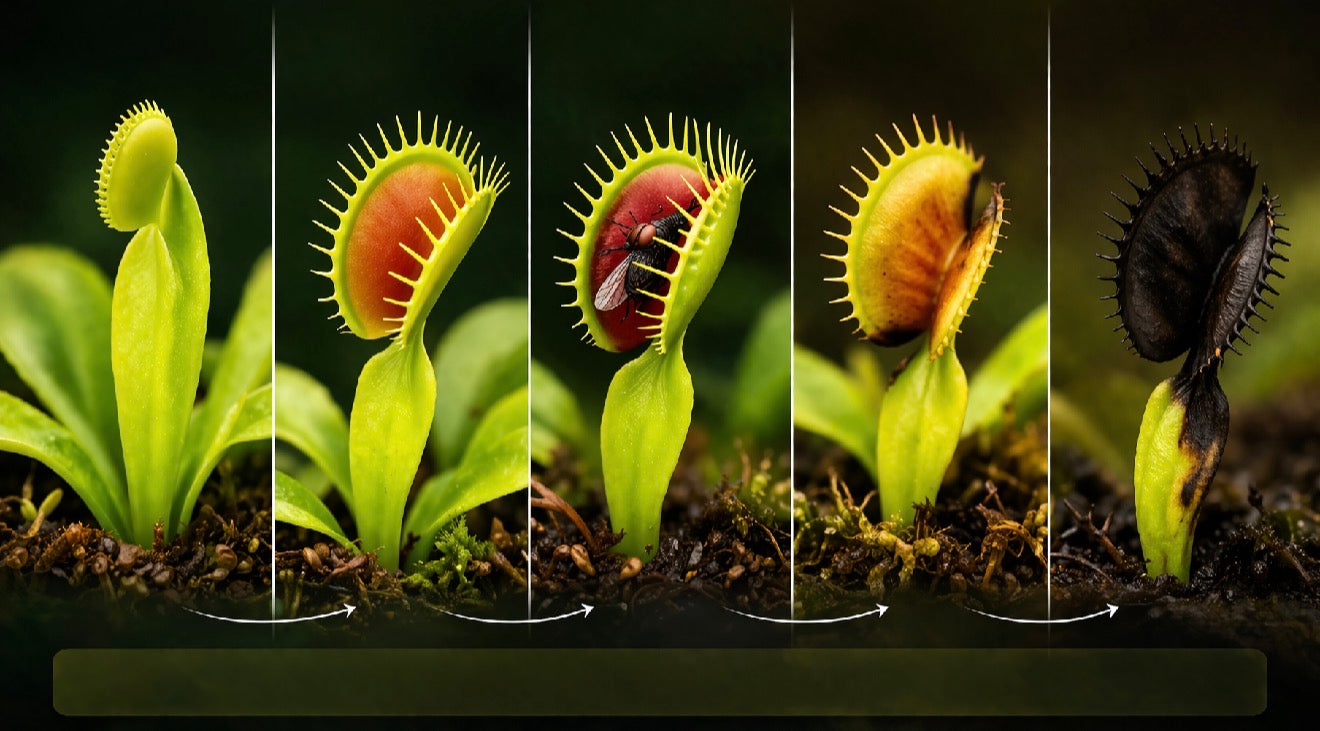
Dionaea muscipula, commonly called Venus flytrap, is a carnivorous plant native to the coastal wetlands of North and South Carolina known for its hinged traps that snap shut on insects. What makes this plant special is its active trapping mechanism—each leaf forms a “jaw” lined with trigger hairs, allowing it to capture prey and supplement nutrients in nutrient-poor soil.
Light drives trap strength, color, and overall health. Place it in a south-facing window where it receives as much direct light as possible. Under grow lights, use 5000K–6500K placed 6–10 inches from the top of the plant. In lower light, traps stay smaller, greener, and weaker. Strong light produces larger traps with deeper red interiors and faster growth.
Watering and setup are critical and very specific. Keep the plant sitting in distilled water, rainwater, or reverse osmosis water only—never tap. The soil should stay consistently wet using a mix designed for carnivorous plants (peat and perlite, no fertilizer). If traps stop closing or new traps come in small and weak, it’s a light issue. If black traps appear, that’s normal aging unless it’s happening rapidly across the plant. If the center crown turns black or mushy, that indicates rot, often from poor water quality or stagnant conditions.
ade of fiberglass or plastic. Ceramic, glass, and especially terrarium-style containers are best to avoid. The pot doesn't need to be particularly wide, but providing decent depth is helpful. Four inches deep is a minimum, but deeper is better, up to 12 inches.
Venus fly traps grow best if they're repotted every 6-12 months. This provides them with fresh, healthy growing medium, as their containers and soil will have accumulated harmful chemicals, minerals, and weeds naturally over time.
The plant goes through a period of dormancy beginning in fall when the hours of daylight and sunlight levels decrease. It will lose its leaves and appear to die, but it actually lives on underground through rhizomes. This is normal and you should not try to make up for the reduction of daylight hours by giving the plant artificial light.
Keep the plant in the coolest room of your home and cut back on the amount of water. Give it just enough water so the soil does not dry out completely. In the early spring when it starts regrowing, resume the regular watering schedule to keep it moist at all times.