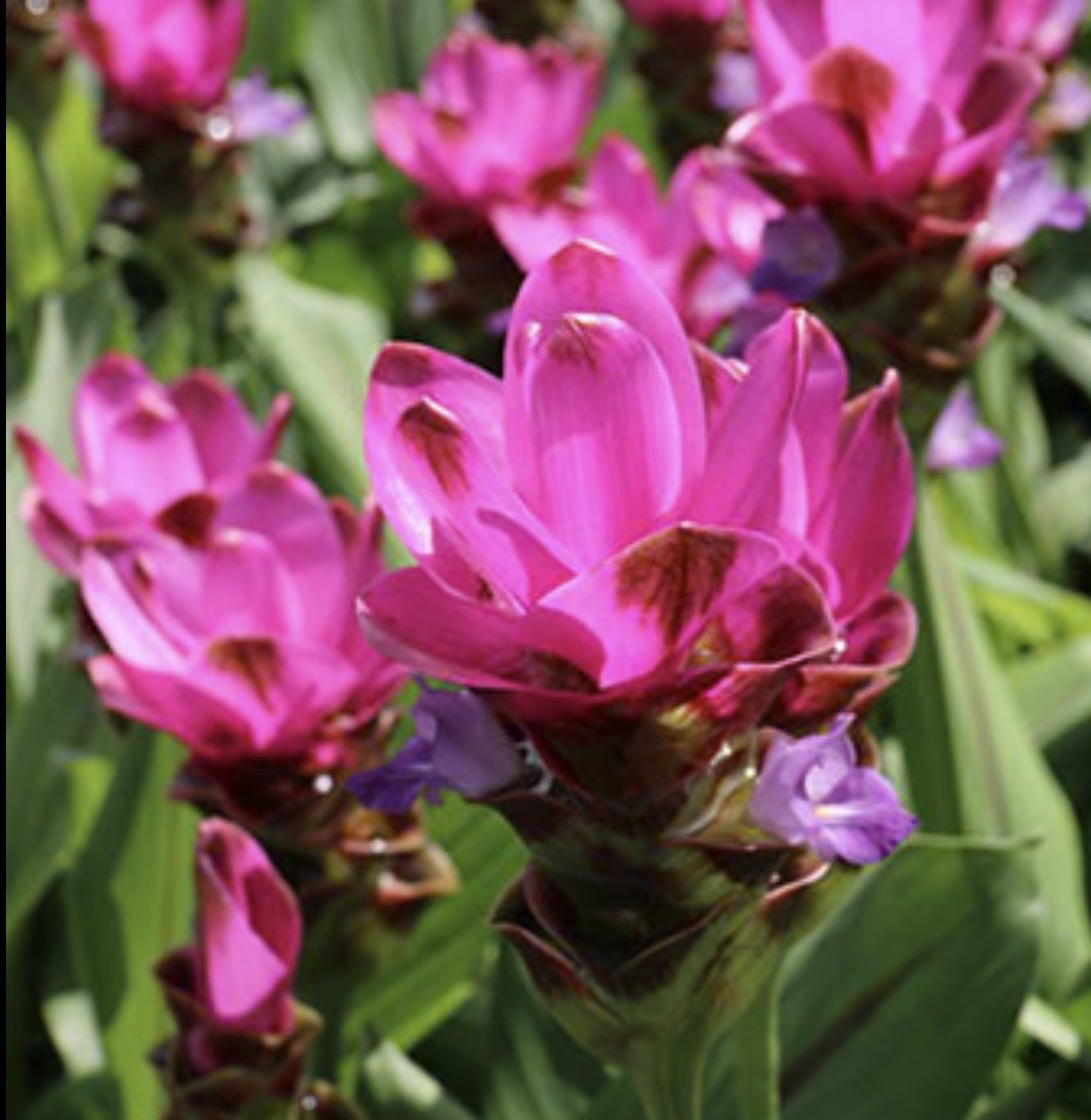
Each plant is unique. Size, shape, fullness, and variegation will vary.
Couldn't load pickup availability
Curcuma ‘Thai Spice Red’, commonly called Thai Spice Red Ginger or Siam Tulip, is a tropical rhizomatous plant grown for its bold red to pink flower bracts and lush foliage. Native to Southeast Asia, Curcuma species grow in warm, humid environments with seasonal rainfall and filtered light. What makes this plant special is the upright flowering spikes that rise above broad tropical leaves, creating a layered, almost torch-like appearance. The foliage is elongated and smooth with a rich green color, while the blooms provide strong tropical color contrast.
Light requirements Place Curcuma ‘Thai Spice Red’ in an east or south window for the best growth and flowering, positioned at the window or within 1 to 3 feet depending on intensity. A west window can work if slightly pulled back from harsh afternoon sun, while a north window will reduce flowering potential. Under grow lights, use 5000K to 6500K and keep the light 8 to 12 inches above the canopy. It performs best around 300 to 800 foot-candles. Brighter light supports stronger flowering and fuller growth.
Watering & environment Keep the soil lightly and consistently moist during active growth, never fully dry and never saturated. Always check the root zone with a chopstick or meter before watering. This plant grows from rhizomes and prefers warm temperatures, higher humidity, and steady airflow. During dormancy or seasonal slowdown, watering should be reduced as the foliage naturally declines.
What your plant is telling you If leaves begin drooping or curling, it is ready for water. If stems soften or the rhizome area becomes mushy, the soil is staying too wet. If flowering is weak or foliage stretches, it needs more consistent light. If the foliage naturally yellows and dies back seasonally, the plant may be entering dormancy rather than declining.
Fantastic prices, fast shipping, and excellent packaging to keep your new plant baby safe. I would highly recommend purchasing from here if you’re looking for a new plant.