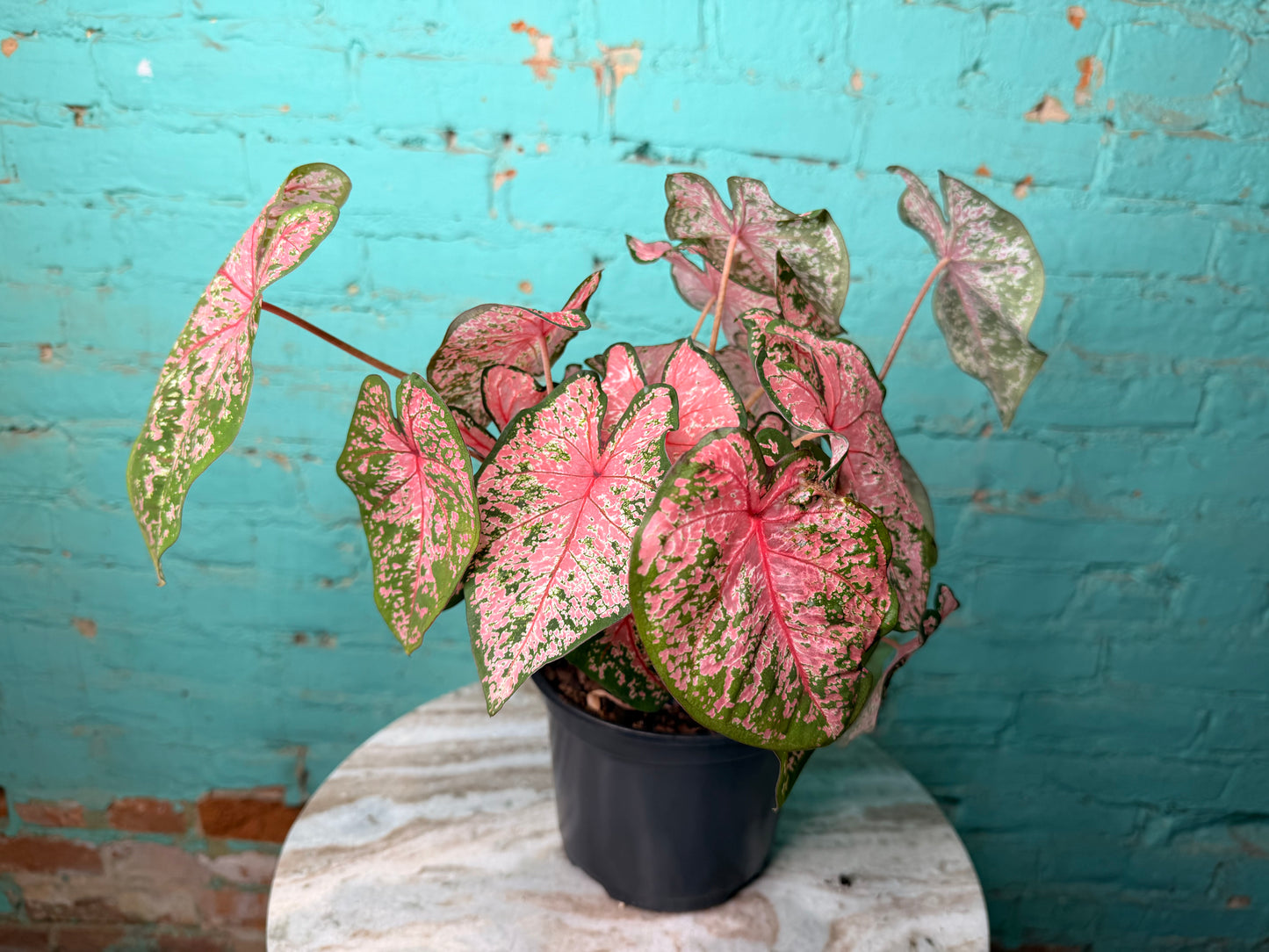
Each plant is unique. Size, shape, fullness, and variegation will vary.
Couldn't load pickup availability
Caladium species and hybrids are tropical plants grown for their colorful, paper-thin foliage. Native to South and Central America, they grow from tubers in warm, humid forest environments with filtered light. What makes caladiums special is the wide range of leaf colors and patterns, including combinations of pink, white, red, green, and burgundy with contrasting veins and margins. The leaves are heart-shaped to arrow-shaped, thin, and slightly translucent, creating a bright, dramatic display.
Light requirements Place caladiums in an east or north window for the best balance of color and leaf protection, positioned at the window or within 1 to 3 feet depending on intensity. Some brighter cultivars can tolerate a gently filtered south or west exposure, but direct sun can quickly scorch the foliage. Under grow lights, use 5000K to 6500K and keep the light 10 to 14 inches above the canopy. They perform best around 150 to 400 foot-candles. Too much light fades or burns the leaves, while too little light reduces color intensity and slows growth.
Watering & environment Keep the soil lightly and consistently moist during active growth, never fully dry and never saturated. Always check the root zone with a chopstick or meter before watering. Caladiums prefer higher humidity, warm temperatures, and steady airflow. Because they grow from tubers, many varieties naturally slow down or go dormant in cooler temperatures or lower light conditions.
What your plant is telling you If leaves begin to droop or curl slightly, it is ready for water. If stems become soft or leaves yellow rapidly, the soil is staying too wet. If colors fade or leaves become smaller, it needs more consistent light. If the plant begins dying back seasonally, it may be entering dormancy rather than declining.
Fantastic prices, fast shipping, and excellent packaging to keep your new plant baby safe. I would highly recommend purchasing from here if you’re looking for a new plant.