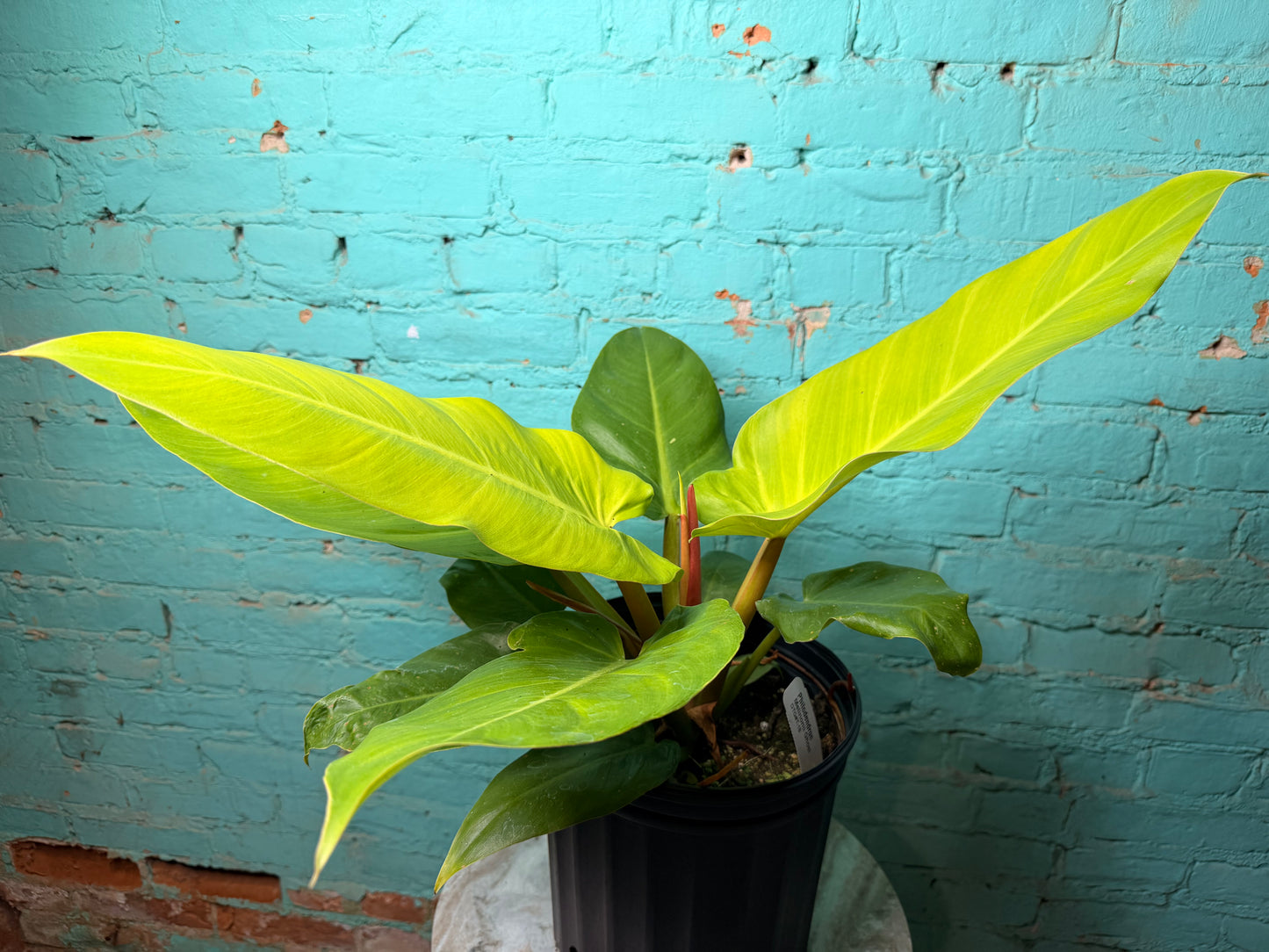
Each plant is unique. Size, shape, fullness, and variegation will vary.
Couldn't load pickup availability
Philodendron ‘Melinonii Ghost’ is a rare self-heading cultivar selected from Philodendron melinonii for its striking pale new growth. Fresh leaves emerge in creamy white to soft chartreuse before gradually maturing to bright green as chlorophyll develops. Native Philodendron melinonii originates from the tropical rainforests of northern South America, where it grows as a terrestrial aroid beneath the forest canopy. Unlike climbing philodendrons, ‘Melinonii Ghost’ forms a large upright rosette, making it an impressive specimen plant with broad, glossy foliage.
Place Philodendron ‘Melinonii Ghost’ within 1–3 feet of an east-facing or south-facing window. Bright light helps maintain the bright ghostly coloration of new leaves while encouraging larger foliage and compact growth. Under grow lights, use a full-spectrum bulb in the 5000K–6500K range. High-output lights should be positioned 8–12 inches above the foliage, while medium-strength lights work best at 10–14 inches. Avoid prolonged harsh afternoon sun, as the pale new leaves are more susceptible to scorching while they harden off.
Water when the root zone is approaching dryness, never on a schedule. Use a chopstick, moisture meter, or clear nursery pot to determine when the roots are ready for water. Plant in a chunky mix of equal parts succulent soil, coarse orchid bark, and perlite to provide excellent drainage and airflow around the roots. Philodendron ‘Melinonii Ghost’ prefers consistent moisture but should never remain in saturated soil. Good airflow around the plant and root zone supports healthy root development and vigorous foliage production.
Philodendron ‘Melinonii Ghost’ communicates through its foliage and overall growth. Healthy plants regularly produce large leaves that emerge creamy white or light chartreuse before gradually turning green as they mature. If new leaves become noticeably smaller or the spaces between leaves increase, the plant is asking for more light. Leaves that lose firmness or begin to droop while the root zone is dry are signaling it is ready for water, while yellowing older leaves combined with consistently wet soil may indicate the roots are remaining too moist. A steady succession of large, pale new leaves followed by strong green mature foliage is one of the best indicators that the plant is thriving.
Wonderful shop to purchase from! I am
Learning so much and am thoroughly enjoying the beginners plant guide series. The pest guide helped me successfully defeat fungus gnats and taught me to transition to bottom watering. Thanks Mel!!
My Aloe plant was packaged with the upmost care. Im glad she put a cold pack because it was a hot day on the day of delivery. I actually cant wait til i can order more plants from her.