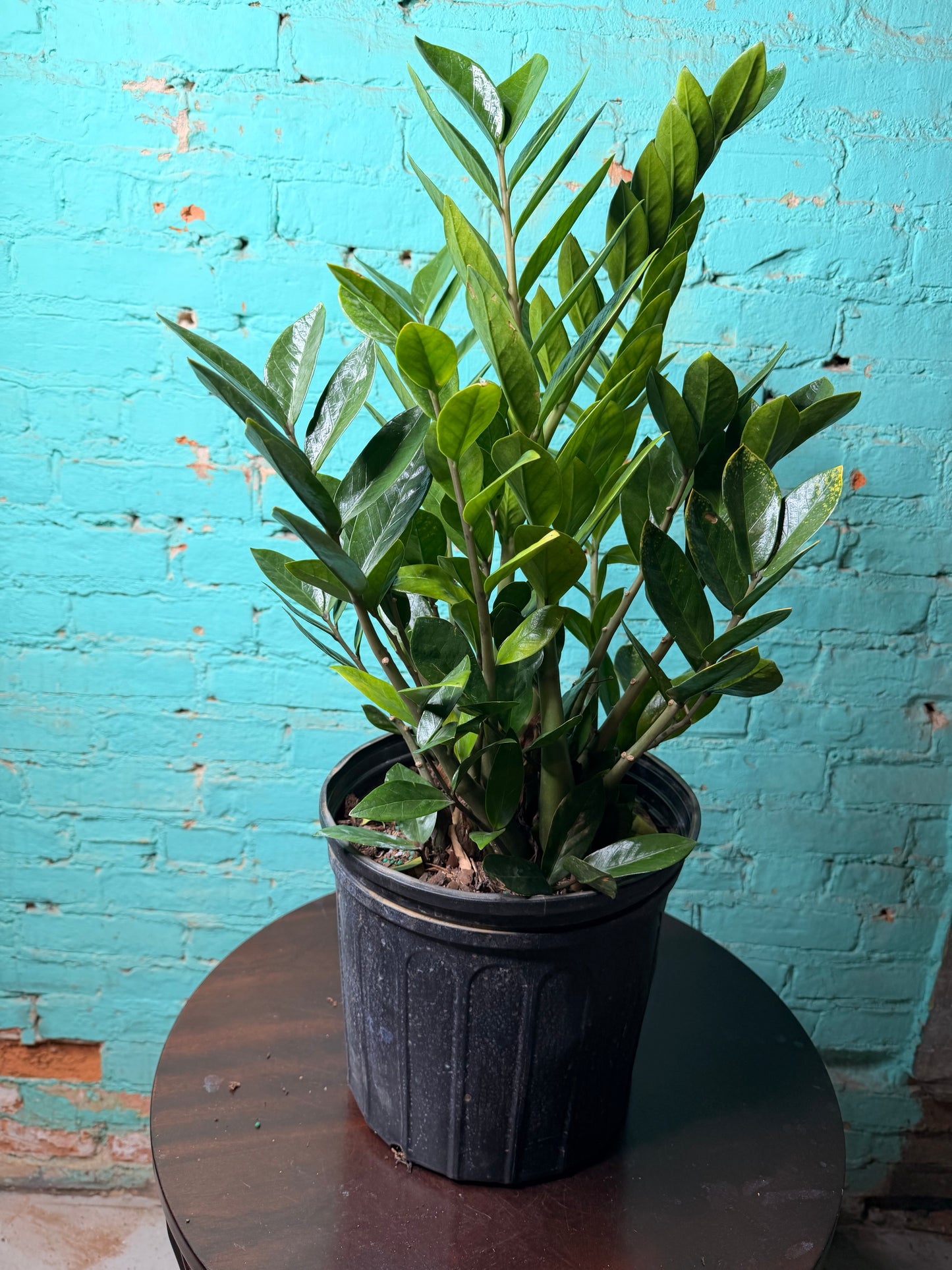
Each plant is unique. Size, shape, fullness, and variegation will vary.
Glossy green foliage, strong upright growth and an almost sculptural shape make the ZZ Plant an easy plant to work into just about any room. Each stalk carries rows of thick, smooth leaflets, creating a full plant without looking unruly, and established plants become increasingly impressive as new growth fills the pot. Native to eastern Africa, this species has developed an underground storage system that allows it to handle periods of dryness exceptionally well, helping explain why it has become such a dependable indoor plant.
What looks like an individual stem is actually one large compound leaf emerging from an underground rhizome. New growth pushes through the soil as a tightly furled spear before extending upward and opening its rows of glossy leaflets. As the rhizomes expand and produce additional growth points, the plant gradually becomes a wider, denser clump. Mature indoor plants commonly reach approximately 2–4 feet tall. It does not vine, branch or need support, and growth often happens in bursts rather than as a constant stream of new leaves.
For natural light indoors, place it 1–3 feet from an east-facing window or 2–4 feet from a west-facing window. It prefers approximately 400–1,000 foot-candles at the leaves. Foot-candles simply tell you how much light is actually reaching your plant. ZZ Plants are well known for tolerating low light, but tolerating low light is different from actively growing in it. At the lower end, expect slower growth and significantly slower water use. If new leaves become increasingly thin, weak or stretched toward the window, increase the amount of usable light reaching the plant.
Under a grow light, use a full-spectrum 5000–6500K fixture positioned approximately 10–14 inches above the canopy, aiming for 400–1,000 foot-candles at the leaves. Kelvin describes the color of the light, while foot-candles tell you how much light is actually reaching the plant. A ZZ does not need extremely intense light, but providing enough usable light supports stronger new growth and gives the underground rhizomes the energy to continue expanding.
Water when your plant needs watered. Allow the root zone to dry substantially before watering thoroughly again. ZZ Plants store water in their thick rhizomes, fleshy roots and substantial foliage, so they can continue drawing from those reserves as the substrate dries. Use a loose, fast-draining substrate with plenty of coarse material such as bark, pumice or perlite and always use a container with drainage. When repotting, position the rhizomes at or very near the soil line rather than burying them deeply. As an established plant expands, healthy rhizomes may naturally push upward and become visible. Seeing them near the surface is not a reason to continually cover them with more soil.
The rhizomes are also one of the best places to look when something goes wrong. Healthy rhizomes should be firm and substantial. If the root zone remains wet for too long, roots can begin to deteriorate and rot can move into the rhizome. Once that happens, an otherwise sturdy stalk may yellow, soften or eventually collapse from the base. A collapsing stalk combined with a wet root zone is a reason to inspect the roots and rhizomes rather than add more water. Soft or mushy rhizomes are a problem; firm rhizomes sitting close to the soil surface are not. After an extended dry period, wrinkling or loss of firmness can instead indicate that the plant is beginning to use more of its stored water.
Success looks like firm rhizomes, sturdy upright foliage and new spears periodically emerging as the underground plant expands. A healthy ZZ does not need to produce leaves constantly. It can appear to sit quietly for months and then suddenly push several new shoots at once. With this plant, strong established foliage and a healthy rhizome system are better indicators of success than how frequently you see a new leaf.