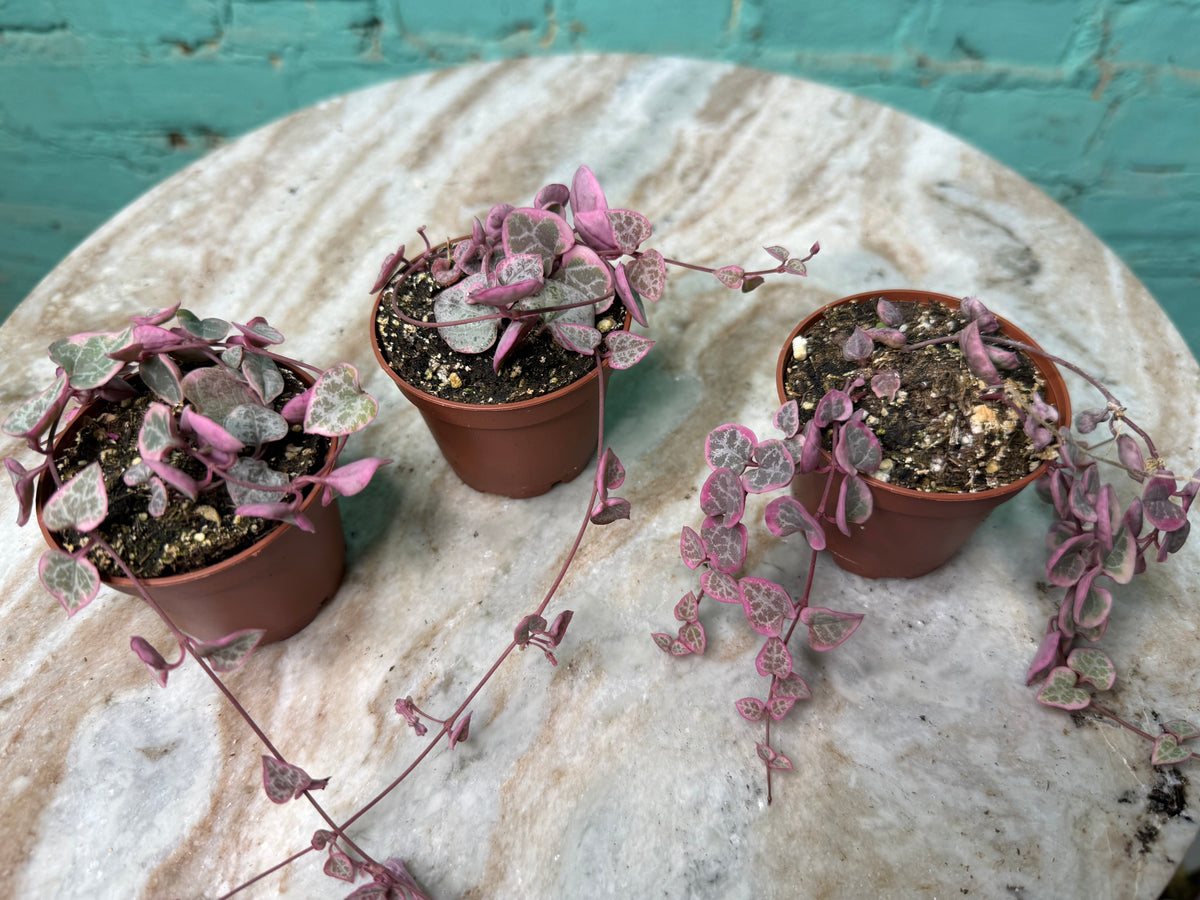
Each plant is unique. Size, shape, fullness, and variegation will vary.
Ceropegia woodii f. Var. ‘Variegated String of Hearts’
Cream, pink and green heart-shaped leaves cascading down fine purple stems make Variegated String of Hearts one of those plants that gets better as the pot fills in. Each leaf carries its own balance of green and cream, while newer growth can develop beautiful pink tones, especially when the plant is receiving plenty of usable light. Native to southern Africa, Ceropegia woodii is a trailing, tuber-forming species adapted to storing moisture rather than depending on constantly wet soil.
This plant grows from slender trailing stems that can eventually reach several feet long. Small tubers develop below the soil, and older vines can also form little aerial tubers at the nodes. Those tubers store water and energy for the plant. The stems can root at their nodes when they contact substrate, which is also why laying vines back across the surface of the pot can help create a fuller plant rather than having all of the growth hanging from only a few points.
For natural light indoors, place it directly in an east-facing window or approximately 1–2 feet from a south-facing window. Aim for approximately 1,500–3,000 foot-candles at the leaves. Foot-candles simply tell you how much light is actually reaching your plant. This is one where I want good light reaching the top of the pot, not just the hanging vines. The growth points at the soil surface need usable light if you want the top to remain full rather than gradually becoming sparse while the vines continue growing below. The variegation is genetic, so stronger light does not create the cream portions of the leaves, although good usable light can support stronger growth and more noticeable pink coloration.
Under a grow light, use a full-spectrum 5000–6500K fixture approximately 8–12 inches above the top of the plant, aiming for 1,500–3,000 foot-candles at the leaves. Keep the light positioned over the crown and soil surface rather than aiming it only at the hanging vines. As the plant trails, the lower vines do not need to receive exactly the same intensity as the active growth at the top. Keeping that crown well lit is one of the biggest pieces of maintaining a full String of Hearts.
Water when your plant needs watered. Allow the root zone to dry substantially before watering thoroughly again. The leaves, underground tubers and any aerial tubers all give this plant places to store moisture, so it can handle considerably more dryback than many tropical trailing plants. Use a loose, fast-draining substrate with potting soil or a succulent-style base combined with plenty of coarse perlite or pumice. A pot staying wet for a long time works against the way this plant is built.
Watch the leaves and the spacing along the newest vines. Firm, slightly thick leaves and relatively close spacing are good signs. When the plant has used a significant amount of its stored moisture, the leaves can become softer and less firm. Increasingly long spaces between leaves, tiny new hearts or a bare top while the vines continue stretching are reasons to look at usable light, especially at the crown. Because heavily variegated leaves contain less green tissue, some sections of the plant may grow more slowly than greener sections, and the balance of green, cream and pink can vary naturally from vine to vine.
Success looks like a full crown with multiple active vines, firm heart-shaped leaves and steady growth cascading down the sides of the pot. As the plant matures, those vines can become incredibly long while the tubers underneath continue supporting new growth. Keep good light over the top, let the plant use the moisture it has stored before watering again and watch the newest growth. A full crown with compact new hearts will tell you far more about how the plant is doing than the length of the vines alone.