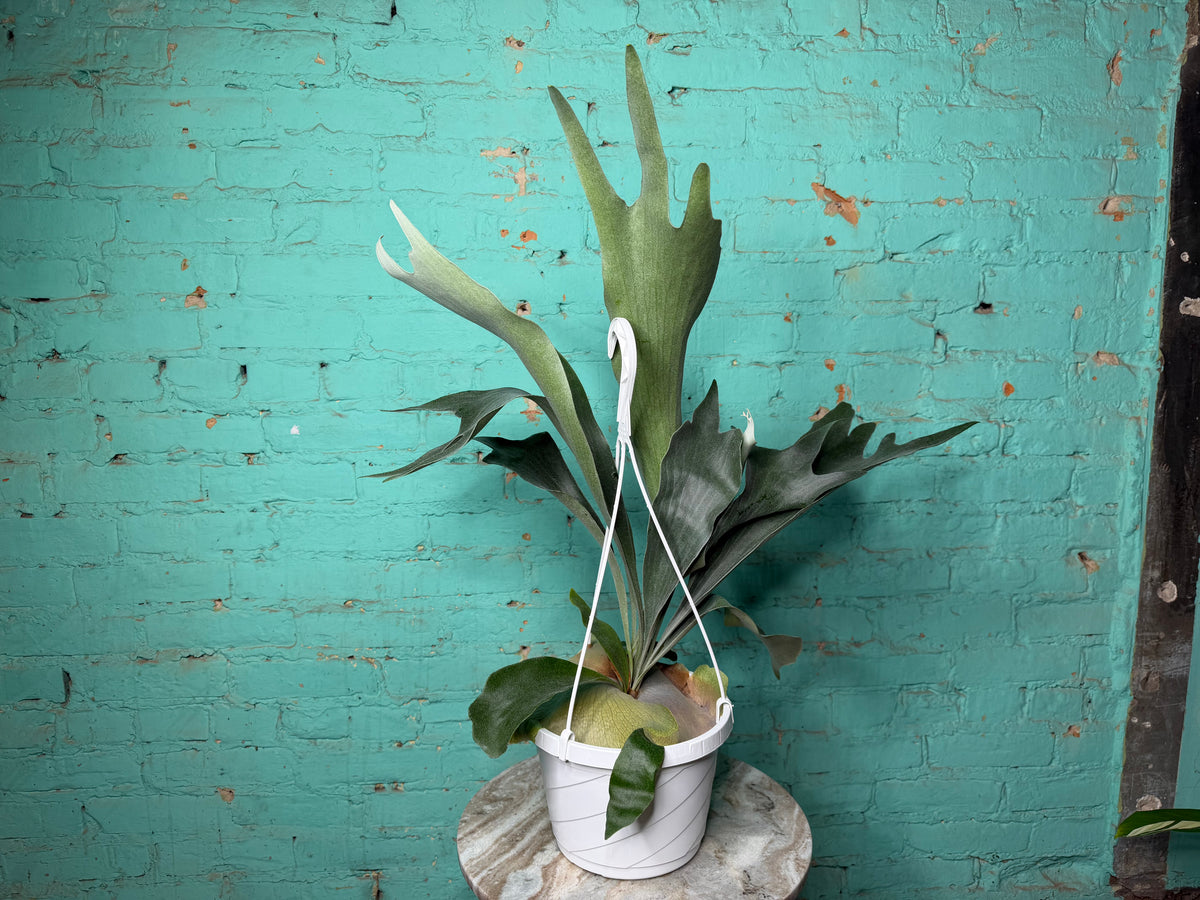
Each plant is unique. Size, shape, fullness, and variegation will vary.
Platycerium bifurcatum | Staghorn Fern
Staghorn Fern is a plant that gets more interesting as it grows. Its long, branching green fronds resemble the antlers of a deer, while a second type of frond grows flat against the base of the plant, creating a rounded shield. Native to eastern Australia and parts of New Guinea, Platycerium bifurcatum naturally grows attached to trees rather than rooted in the ground. That unusual growth habit makes it a great choice for hanging baskets, mounted displays or anyone who wants something a little different from a traditional potted fern.
What makes this fern especially interesting is that it produces two completely different types of fronds. The green, antler-shaped fronds collect light and produce spores as the plant matures. The rounded shield fronds protect the root system and help collect organic material and moisture. As those shield fronds age, they naturally turn brown and papery while remaining attached to the plant. They’re an important part of how this fern grows, so leave them in place. Over time, established plants can produce additional growing points, creating a larger cluster of overlapping shields and branching antlers. Mature fronds can reach several feet long under favorable conditions.
For natural light, place it approximately 1–2 feet from an east-facing window or 2–4 feet from a south-facing window, adjusting for how much direct sunlight reaches the foliage. Aim for approximately 800–1,500 foot-candles at the green fronds as a practical indoor growing range. Foot-candles simply tell you how much light is actually reaching your plant. Staghorn Ferns appreciate enough usable light to support steady frond development, and established plants can tolerate some gentle direct morning sunlight. If new fronds become smaller or growth slows considerably, evaluate the light reaching the plant before making other changes.
Under a grow light, use a full-spectrum 5000–6500K fixture positioned approximately 10–16 inches from the foliage, adjusting the distance to maintain around 800–1,500 foot-candles at the fronds. Kelvin describes the color of the light, while foot-candles tell you how much light is actually reaching the plant. If your fern is mounted vertically, position the fixture so light reaches the green antler fronds rather than concentrating only on the shield at the base.
Water when your plant needs watered. Because Staghorn Ferns naturally grow attached to trees, their roots appreciate moisture followed by good airflow rather than remaining in dense, saturated soil. Potted plants grow well in a loose mixture containing orchid bark, coarse perlite and a moisture-retentive component such as sphagnum moss. Mounted plants are often grown with sphagnum moss surrounding the roots. Water thoroughly, then allow the root area to lose a substantial portion of its moisture before watering again. Mounted ferns may dry more quickly than potted plants, so check the actual moisture around the roots rather than following a calendar. Avoid pulling back or removing the shield fronds to check the roots.
Pay attention to the development of both types of fronds. Healthy new antler fronds emerge green and gradually extend into their characteristic branching shape. A fine, pale, slightly fuzzy coating on the foliage is normal and helps protect the fronds, so there’s no need to wipe it away. The shield fronds begin green and naturally turn brown as they mature. That change is part of the plant’s growth cycle and is different from widespread deterioration of the green antler fronds. If new growth repeatedly declines or the root area remains wet for extended periods, evaluate moisture, airflow and usable light together.
Success looks like firm, healthy antler fronds, new shield growth and a plant that gradually expands into a larger, more architectural display. As it matures, the overlapping shields and branching green fronds create the distinctive shape that makes Staghorn Fern so recognizable. Whether grown in a hanging basket or eventually mounted on wood, Platycerium bifurcatum is a fascinating fern that brings a completely different growth habit into a houseplant collection.