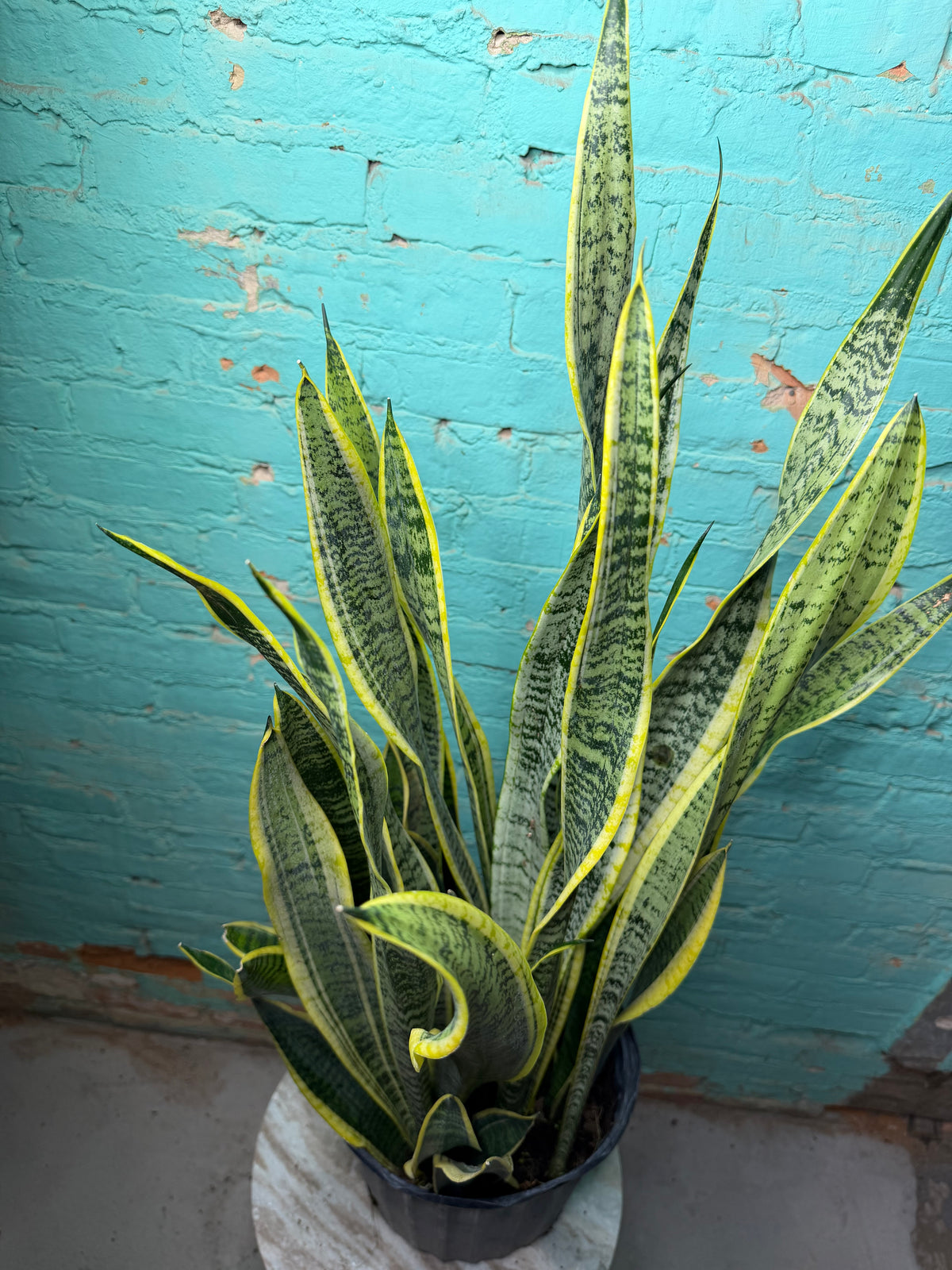
Each plant is unique. Size, shape, fullness, and variegation will vary.
Dracaena trifasciata ‘Laurentii’ has long green leaves patterned with irregular horizontal bands of lighter and darker green and bordered by golden-yellow margins. The species is native to tropical Africa and grows in seasonally dry environments where its thick leaves and underground rhizomes help it store water. ‘Laurentii’ is the variegated cultivar recognized by its yellow leaf margins. You may also recognize its older botanical name, Sansevieria trifasciata ‘Laurentii’.
This plant grows from underground rhizomes that spread horizontally beneath the soil and produce new shoots around the original growth. Over time, those shoots create a dense cluster of upright leaves that can reach several feet tall indoors. It does not climb or vine and does not need a support. As the rhizome continues to grow, an established plant can gradually fill its container with additional growth points.
For natural light indoors, an east-facing window within approximately 1–2 feet or a south-facing window within approximately 2–4 feet is a good starting point. Aim for approximately 1,000–2,000 foot-candles at the leaves. Foot-candles simply tell you how much light is actually reaching your plant. Snake Plants are able to survive in lower light, but their ability to tolerate low light does not mean low light is ideal for active growth. More usable light allows the plant to grow more consistently and use the water in its root zone more efficiently.
Under a grow light, use a full-spectrum 5000–6500K fixture positioned approximately 8–12 inches from the top of the foliage, aiming for approximately 1,000–2,000 foot-candles at the leaves. Kelvin describes the color of the light, while foot-candles tell you how much light is actually reaching the plant. For a large specimen, consider the entire height of the plant when positioning the fixture so useful light reaches more than just the tips of the tallest leaves.
Water when your plant needs watered. The thick leaves and rhizomes hold stored water, allowing the plant to use moisture already available to it before needing another full watering. Allow the root zone to dry substantially, then water thoroughly and allow excess water to drain. A well-draining potting mix helps provide oxygen around the roots and rhizomes while preventing the pot from remaining wet longer than the plant can use that moisture. How quickly it dries will change with light, temperature, root mass, pot size and season.
Pay attention to both the root zone and new growth. A pot that remains wet much longer than expected is information about the environment, especially the amount of light reaching the plant and how much water it is currently using. New shoots emerging through the soil indicate active rhizome growth. Firm leaves and continued production of new growth are useful signs that the plant has the resources it needs. Older leaves may develop scars, splits or other cosmetic damage over time without affecting healthy new growth.
As it matures, the rhizome continues producing additional shoots and the plant becomes a fuller cluster of tall green-and-yellow foliage. Healthy growth does not depend on watering according to a schedule or keeping the soil continuously moist. Give the plant enough light to actively grow, allow it to use the water stored in both its tissues and root zone, and watch what its newest growth is showing you.