The Rooted Plant Shop
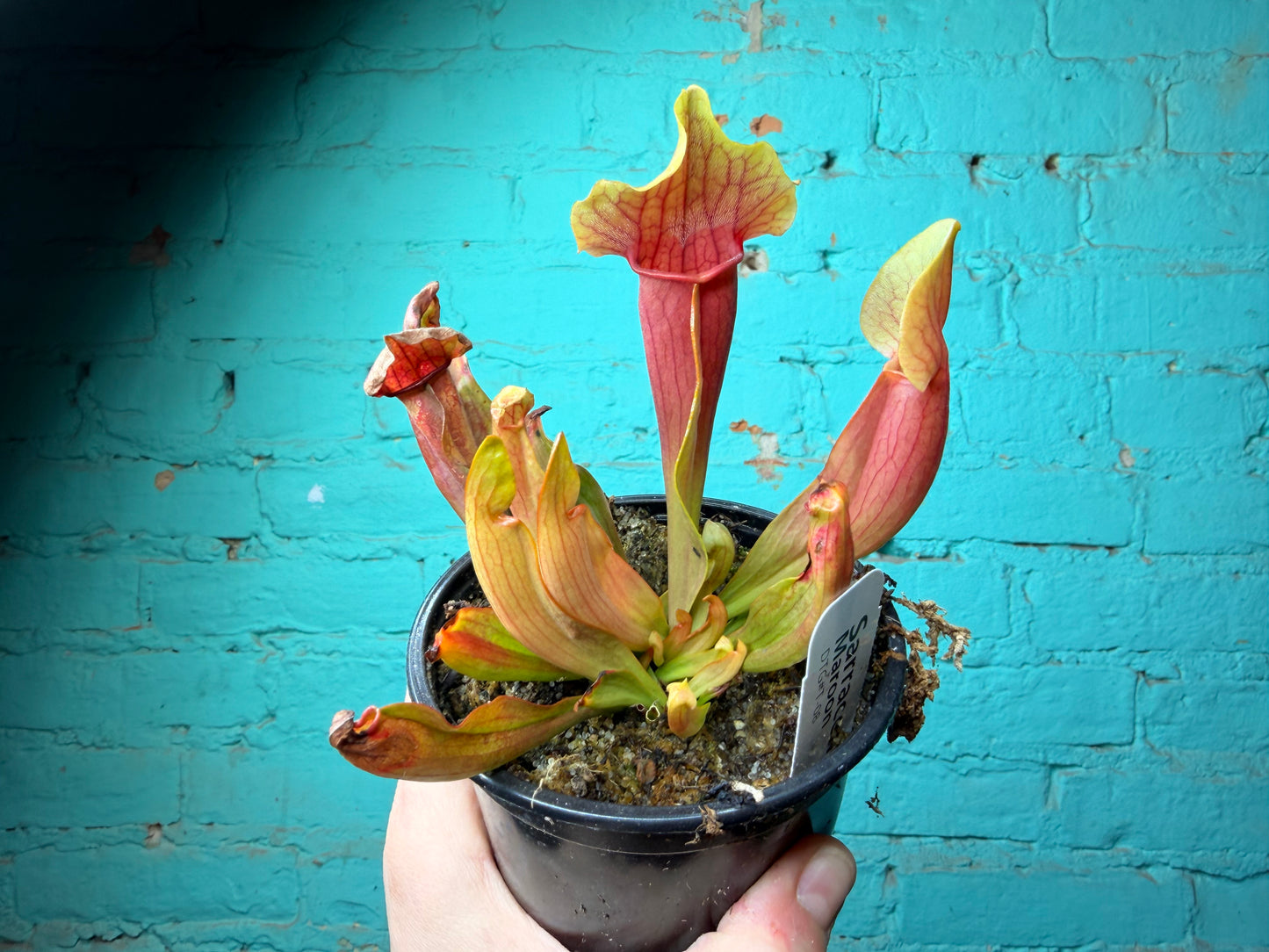
Sarracenia Maroon 4”
Each plant is unique. Size, shape, fullness, and variegation will vary.
Couldn't load pickup availability
Sarracenia, commonly known as pitcher plants, is a genus of large, striking carnivorous plants native to North America. These plants are characterized by their tall, tubular leaves that resemble pitchers, which they use to trap and digest insects. The leaves are filled with a liquid at the base, where prey is lured by nectar and the plant’s colorful appearance. Once an insect falls into the pitcher, it struggles to escape, sliding down the slippery sides into the pool of digestive enzymes at the bottom, where it is broken down and absorbed. Sarracenia species can grow quite large, with some plants reaching up to 3 feet in height, making them a favorite among collectors and horticulturists.
To keep a Sarracenia healthy, it is essential to replicate the conditions of its native wetlands. These plants thrive in full sunlight and require a humid environment, so they are often grown in boggy, moist conditions. They prefer nutrient-poor, acidic soil, typically a mixture of sphagnum moss and sand or perlite, and should never be planted in regular potting soil. Sarracenia plants are sensitive to minerals in tap water, so they should be watered with distilled or rainwater to avoid damaging their delicate root systems. During the growing season, they benefit from occasional feeding of insects, though they can still survive by catching their own prey. Winter dormancy is also important for Sarracenia, as they require a period of cold temperatures to thrive year after year.
One lesser-known fact about Sarracenia is that different species of this genus employ various strategies for attracting prey. For example, some species use brightly colored patterns and nectar droplets to lure insects, while others use UV light patterns that are visible to certain insects but not to humans. Additionally, the shape and size of the pitcher can vary greatly between species, with some being narrow and tall, while others are short and wide. Despite their reliance on insects for nutrition, Sarracenia plants are not exclusive to carnivory; they can also absorb nutrients from the surrounding soil and water, although insect capture is essential for their full growth and health.
Sarracenia species face various environmental challenges, particularly habitat loss due to human development and the draining of wetland areas. Despite these threats, many species of Sarracenia are relatively hardy and adaptable, thriving in carefully managed cultivation environments. In fact, some species are quite rare and endangered in the wild, making conservation efforts crucial to preserving these remarkable plants. While they can be found in nature across North America, especially in the southeastern U.S., they are also popular in gardens and greenhouses, where their unique appearance and insect-catching ability continue to fascinate plant enthusiasts around the world.
Share

Let customers speak for us
from 826 reviewsAll of my plants were shipped safely. Arrived in a healthy condition.
Plant arrived perfect as always. Heathy and gorgeous!! Currently thriving and doing well and happy!! Always a positive experience with The Rooted Plant Shop!! It is my forever go to plant shop when shopping for plants!! Mel is the absolute best!!!
Beautiful plant and arrived in perfect condition.
Healthy beautiful plant, lots of new growth. Every order has been packaged so well. And the plants are incredible!
My plant was wrapped very well and it arrived in good condition. I am very pleased with my experience and would definitely order again! Thank you!!
It arrived packaged beautifully and the color is even more vibrant in person. So excited to watch it grow!
Beautiful plant! Very well packaged and timely shipping!
The plant arrived in perfect condition and is beautiful. I love it!
Despite the “beginner” name, I’d say it’s genuinely useful at any experience level. It starts with a solid foundation for those just getting into houseplants, but the depth of the later guides means it doesn’t feel like it’s talking down to anyone with more experience. It’s less about basic care instructions and more about building a real understanding of how plants function, which is useful whether you’re keeping your first pothos alive or managing a larger, more varied collection.
What sets it apart is the emphasis on understanding why plants behave the way they do, not just prescribing one-size-fits-all care instructions. This approach makes it easier to recognize early warning signs and address issues before they become serious problems.
Overall, I’d recommend this to anyone who wants a more thorough, connected understanding of plant care rather than piecemeal advice — regardless of how long you’ve been growing.