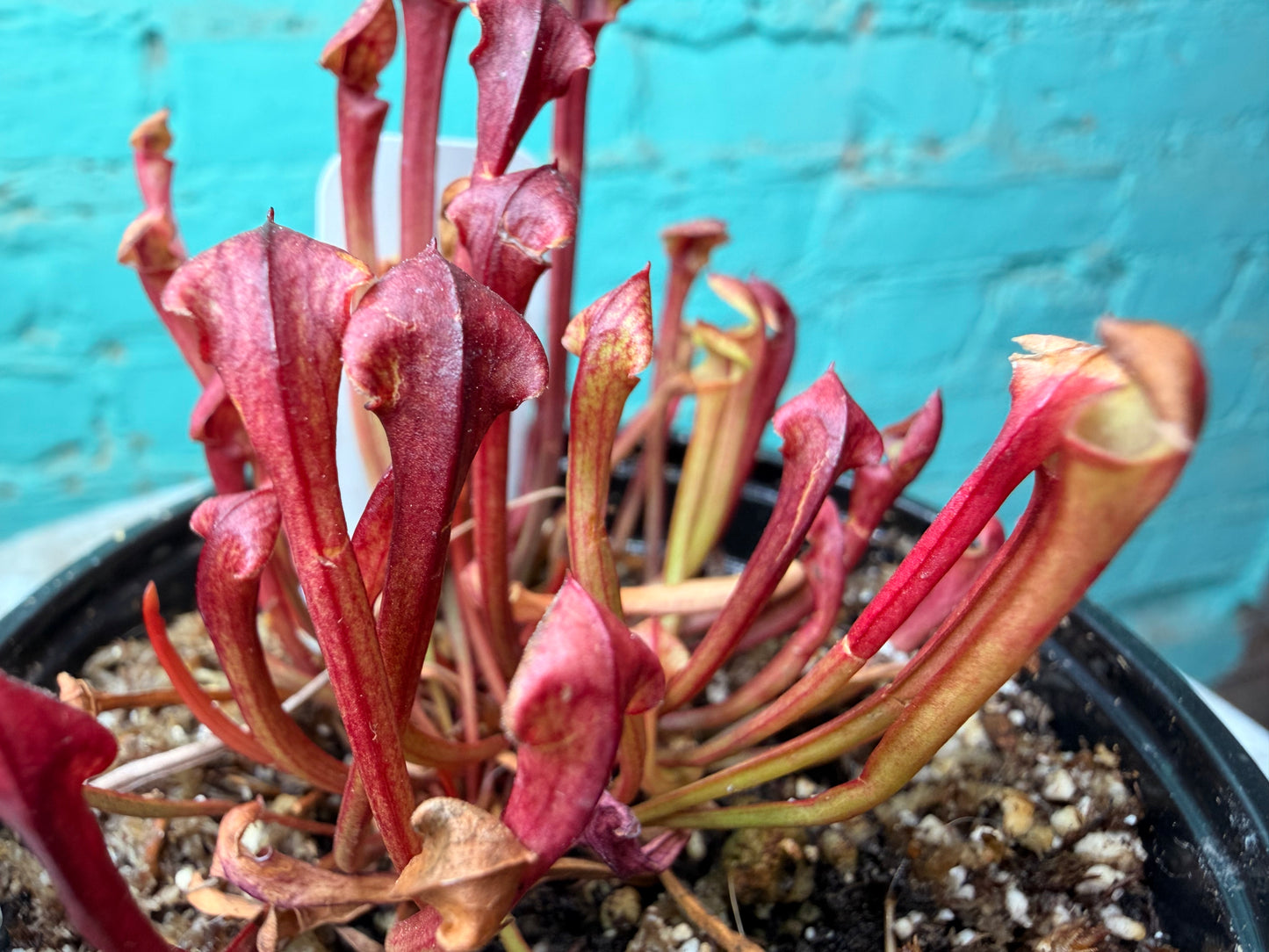
Each plant is unique. Size, shape, fullness, and variegation will vary.
Sarracenia flava var. rubricorpora 'Variegated' is a highly sought-after North American pitcher plant grown for its combination of deep red pigmentation and unstable variegation. Mature pitchers can develop rich burgundy to nearly black-red tubes while also showing cream, yellow, or lime streaking through the foliage. Because it combines both anthocyanin-heavy coloration and variegation, the appearance can shift dramatically season to season depending on light intensity, temperature, and overall plant maturity.
This plant needs extremely high light to develop its best color. Outdoors in full sun is ideal — 6–8+ hours of direct sun minimum. Strong light deepens the red rubricorpora pigmentation and helps maintain compact, upright pitchers. Under weaker light, pitchers often stay greener, elongate, and lose much of the dramatic contrast. Variegation itself is genetic, but brighter light usually sharpens the separation between the cream and red areas. Indoors, even strong grow lights often struggle to match true outdoor sun for Sarracenia coloration. If using grow lights, aim for 5000K–6500K high-output fixtures positioned about 8–12 inches above the pitchers with long photoperiods.
Use only distilled water, rainwater, or reverse osmosis water. Keep the media consistently wet using the tray method during active growth. A nutrient-poor carnivorous mix such as sphagnum peat and perlite is ideal. Never use fertilized potting soil. During dormancy, the plant will naturally slow or partially die back in colder months — this is required for long-term health. If the variegated portions brown first, that is normal because pale tissue burns faster and has less chlorophyll reserve. Weak pitchers, floppy growth, or reduced red coloration almost always point back to insufficient light.
Sarracenia, commonly known as pitcher plants, is a genus of large, striking carnivorous plants native to North America. These plants are characterized by their tall, tubular leaves that resemble pitchers, which they use to trap and digest insects. The leaves are filled with a liquid at the base, where prey is lured by nectar and the plant’s colorful appearance. Once an insect falls into the pitcher, it struggles to escape, sliding down the slippery sides into the pool of digestive enzymes at the bottom, where it is broken down and absorbed. Sarracenia species can grow quite large, with some plants reaching up to 3 feet in height, making them a favorite among collectors and horticulturists.
To keep a Sarracenia healthy, it is essential to replicate the conditions of its native wetlands. These plants thrive in full sunlight and require a humid environment, so they are often grown in boggy, moist conditions. They prefer nutrient-poor, acidic soil, typically a mixture of sphagnum moss and sand or perlite, and should never be planted in regular potting soil. Sarracenia plants are sensitive to minerals in tap water, so they should be watered with distilled or rainwater to avoid damaging their delicate root systems. During the growing season, they benefit from occasional feeding of insects, though they can still survive by catching their own prey. Winter dormancy is also important for Sarracenia, as they require a period of cold temperatures to thrive year after year.
One lesser-known fact about Sarracenia is that different species of this genus employ various strategies for attracting prey. For example, some species use brightly colored patterns and nectar droplets to lure insects, while others use UV light patterns that are visible to certain insects but not to humans. Additionally, the shape and size of the pitcher can vary greatly between species, with some being narrow and tall, while others are short and wide. Despite their reliance on insects for nutrition, Sarracenia plants are not exclusive to carnivory; they can also absorb nutrients from the surrounding soil and water, although insect capture is essential for their full growth and health.
Sarracenia species face various environmental challenges, particularly habitat loss due to human development and the draining of wetland areas. Despite these threats, many species of Sarracenia are relatively hardy and adaptable, thriving in carefully managed cultivation environments. In fact, some species are quite rare and endangered in the wild, making conservation efforts crucial to preserving these remarkable plants. While they can be found in nature across North America, especially in the southeastern U.S., they are also popular in gardens and greenhouses, where their unique appearance and insect-catching ability continue to fascinate plant enthusiasts around the world.