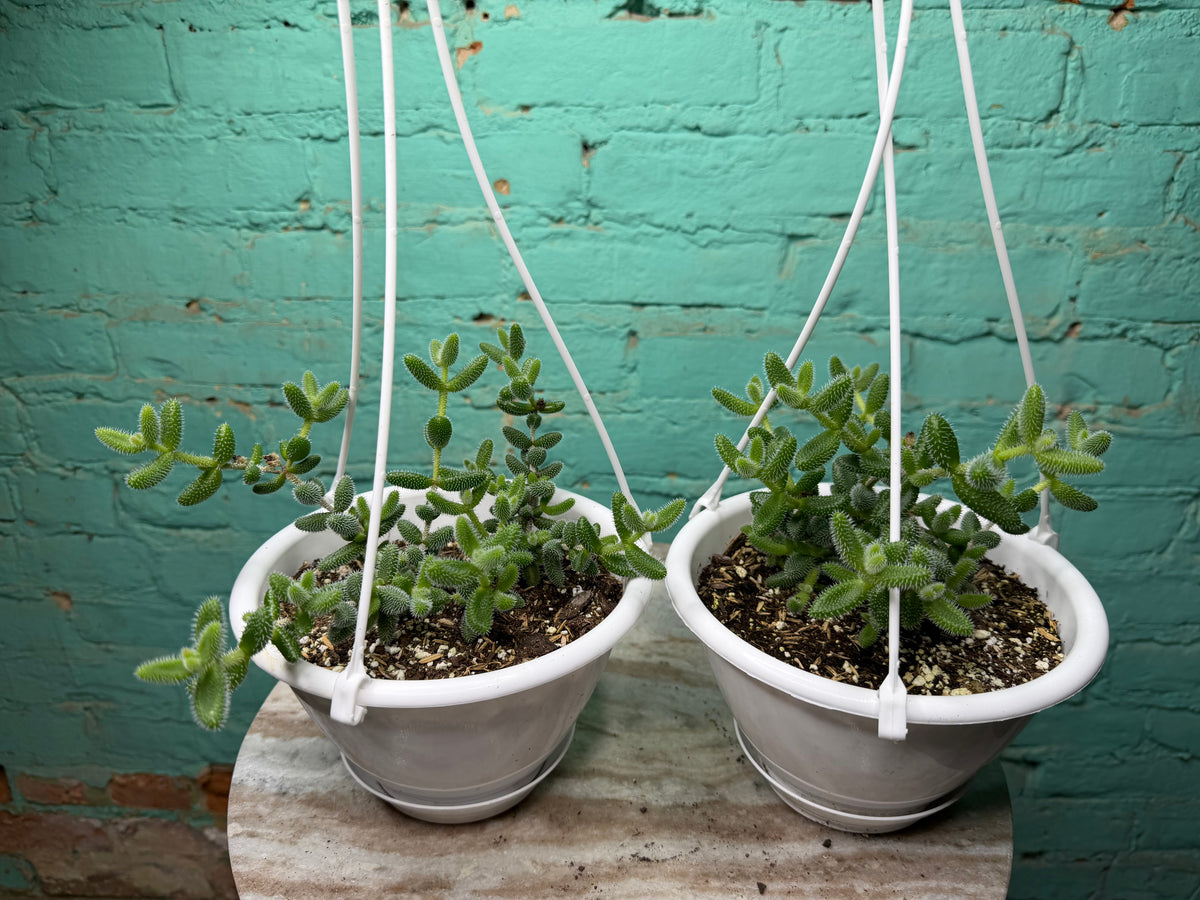
Each plant is unique. Size, shape, fullness, and variegation will vary.
Delosperma echinatum | Pickle Plant
If you’ve ever wanted a succulent that looks like it’s growing tiny green pickles, this is the one. Native to South Africa, Delosperma echinatum gets its unusual appearance from plump, bright green leaves covered in tiny, soft white bristles. Despite looking prickly, those little bristles are surprisingly soft. Its botanical name, echinatum, refers to that spiny-looking texture. The leaves grow along slender stems, giving the entire plant a fuzzy, almost playful appearance that makes it stand out from more traditional succulents.
Pickle Plant begins with upright, branching stems that gradually arch and trail as they grow longer. Mature plants can develop stems approximately 8–12 inches long or more, creating a loose, cascading shape that looks especially interesting spilling over the edge of a planter. Under favorable conditions, it can also produce small, pale yellow to creamy white, daisy-like flowers. Between its unusual foliage and naturally branching growth, this is a succulent that gets more interesting as it fills out.
For natural light, place it directly in an east-facing window or approximately 1–2 feet from a south-facing window. Aim for approximately 2,000–4,000 foot-candles at the leaves as a practical indoor growing range. Foot-candles simply tell you how much light is actually reaching your plant. Enough usable light helps maintain compact stems and closely spaced leaves. If the stems begin stretching with larger gaps between those little pickles, that’s a good reason to check how much light the plant is receiving. Introduce stronger direct sunlight gradually, especially if the plant has been growing under lower light.
Under a grow light, use a full-spectrum 5000–6500K fixture positioned approximately 6–10 inches above the foliage, adjusting the distance to maintain around 2,000–4,000 foot-candles at the leaves. Kelvin describes the color of the light, while foot-candles tell you how much light is actually reaching the plant. As the stems begin trailing, make sure the growing tips continue receiving enough light to maintain healthy, compact growth.
Water when your plant needs watered. Those plump little leaves store moisture, allowing the soil to dry substantially between thorough waterings. A loose, fast-draining succulent mix containing potting soil with plenty of pumice or coarse perlite works well. Choose a container with drainage and check moisture through the pot before watering again. During active growth, the plant may use water more quickly, while cooler temperatures and reduced light generally slow that process.
Pay attention to the firmness of the leaves and the spacing along the stems. Healthy new growth produces plump, closely arranged leaves covered in their characteristic white bristles. Slight wrinkling can indicate that the plant has used some of its stored moisture, while persistent softness or deterioration near the base is a reason to inspect the roots and how long the soil remains wet. If new stems become thin and stretched, evaluate the light reaching the plant.
Success looks like sturdy, branching stems covered in plump green leaves, steady new growth and a plant that gradually becomes fuller as its stems arch over the container. With enough usable light and a well-draining root zone, Pickle Plant develops into a wonderfully unusual little succulent. It’s a fun addition to any collection, especially if you enjoy plants with interesting textures and growth habits.