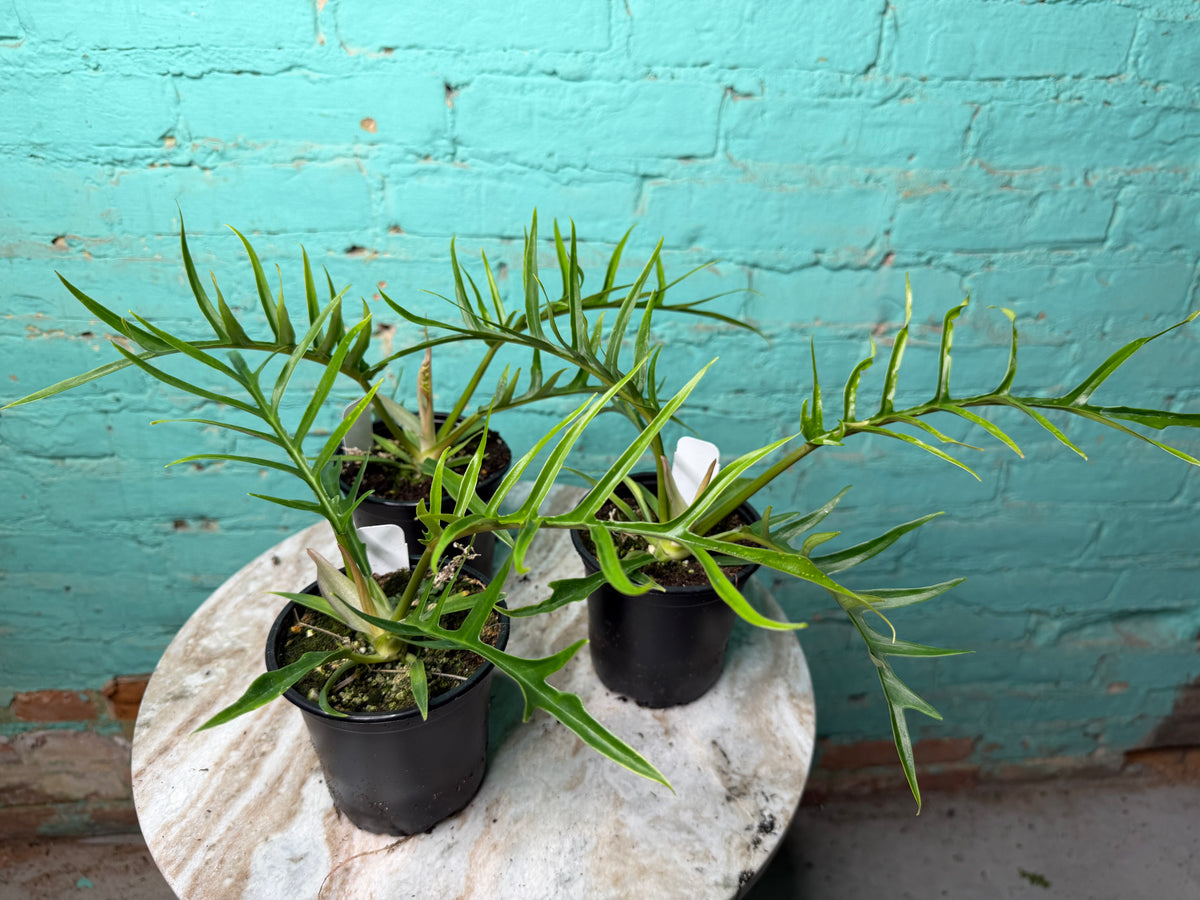
Each plant is unique. Size, shape, fullness, and variegation will vary.
Philodendron tortum | Tortum Philodendron
Long, narrow leaf segments radiating from a central midrib give Tortum an airy, almost skeletal shape that looks completely different from a typical broad-leaved Philodendron. New leaves emerge tightly rolled and gradually unfurl into the deeply divided foliage that makes this Brazilian species so recognizable. The individual segments become longer and more defined as the plant matures, creating a surprisingly large plant without the canopy ever looking especially heavy.
This is a climbing Philodendron with a central stem, distinct nodes and aerial roots. Give those roots a moss pole, plank or other vertical support they can attach to, and the plant has the opportunity to develop larger, more mature foliage while maintaining tighter growth along the stem. Without support it can continue growing, but the stem eventually becomes harder to manage and the plant loses some of the upright structure it naturally wants to build.
For natural light indoors, place it 1–3 feet from an east-facing window or 2–4 feet from a west-facing window. Aim for approximately 800–1,500 foot-candles at the leaves. Foot-candles simply tell you how much light is actually reaching your plant. Watch the newest section of the stem. If the spaces between leaves begin increasing while successive leaves become smaller or less substantial, give the plant more usable light. Because the foliage is naturally narrow and deeply divided, use changes from one leaf to the next rather than judging its light from the open appearance of the canopy.
Under a grow light, use a full-spectrum 5000–6500K fixture approximately 8–12 inches above the canopy, aiming for 800–1,500 foot-candles at the leaves. Keep the active growing point within the useful coverage as the plant climbs. Tortum can gain height quickly once established, so a light that began at the correct distance can end up beside or below the newest foliage if it is not moved with the plant.
Water when your plant needs watered. Allow it to use a good portion of the available moisture before watering thoroughly again, then allow excess water to drain. Give the roots a loose aroid mix with potting soil or coco coir, chunky orchid bark and coarse perlite or pumice. A climbing plant that is actively producing new leaves in strong light can move through water considerably faster than the same plant during slower growth, so let the root zone tell you when it is ready.
Pay attention to how each new leaf develops. Tortum’s new foliage begins tightly rolled and can look surprisingly small before it opens and expands. Give that leaf time to finish developing before deciding something is wrong. If new leaves repeatedly struggle to open, emerge damaged or become progressively smaller, look at moisture consistency, root health, usable light and how quickly that tender developing foliage is drying. Avoid manually pulling a new leaf open. Also watch the internodes along the climbing stem. Changes in their spacing can tell you quite a bit about what the plant has been experiencing.
Success looks like a strong climbing stem, active aerial roots, relatively tight internodes and new leaves that maintain or increase their size as the plant moves upward. As Tortum matures, the individual leaf segments become increasingly long and dramatic while still keeping that light, open structure. Keep your attention on the direction of the newest growth. Stronger attachment, substantial new foliage and a healthy root system underneath it tell you the plant has what it needs to keep moving forward.