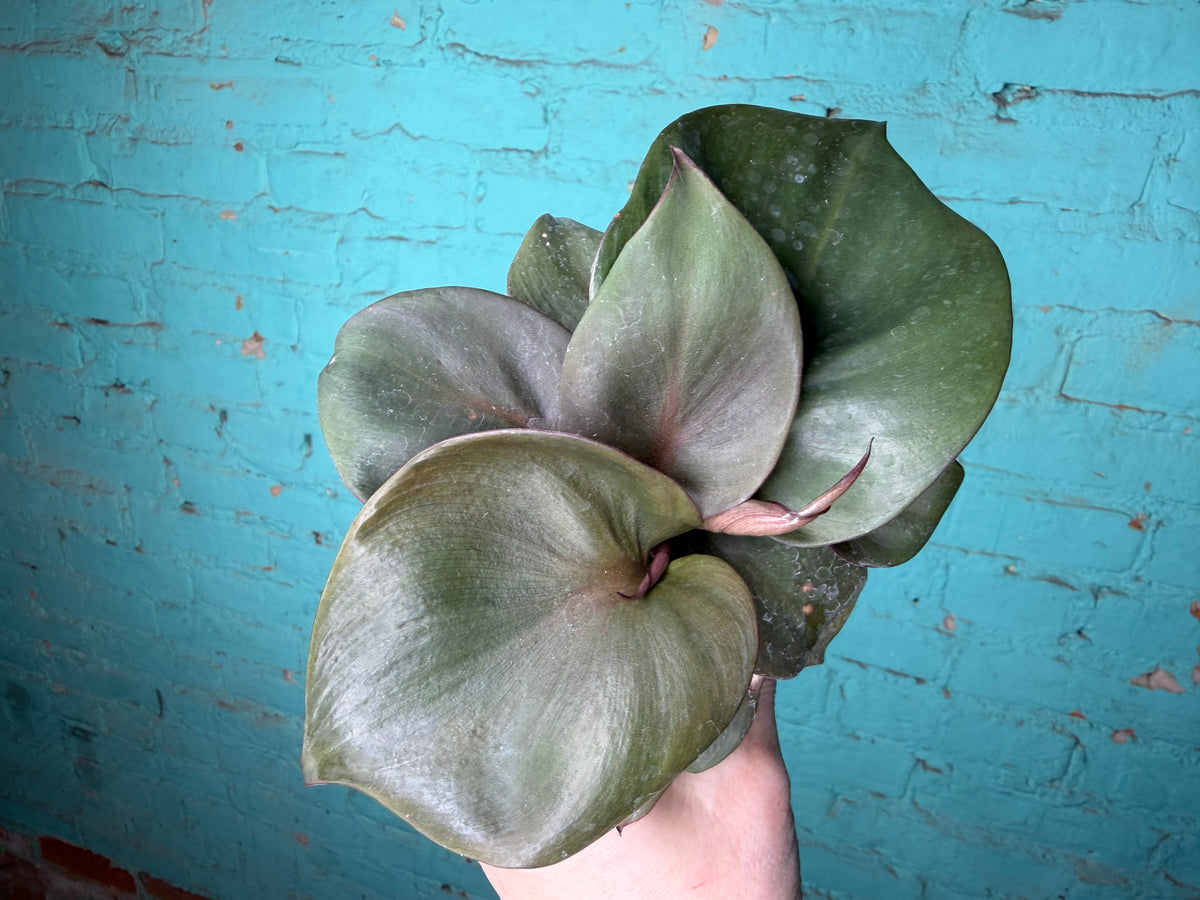
Each plant is unique. Size, shape, fullness, and variegation will vary.
Philodendron ‘Red Heart’ | Red Heart Philodendron
Deep red new growth, burgundy petioles and broad heart-shaped leaves give this Philodendron a rich color palette that changes as each leaf matures. Fresh foliage can emerge in shades of red to reddish bronze before gradually developing deeper green tones, leaving the plant with layers of color rather than a single uniform shade. ‘Red Heart’ is a cultivated Philodendron trade name, but a reliably documented parentage or formal breeding history is not readily established, so it is best described by the growth and characteristics of the plant itself rather than assigning it an unsupported lineage.
This is a compact, self-heading Philodendron rather than a long-vining climber. New leaves emerge close together around a central growing stem, gradually building a broad, dense plant. As it matures, the central stem can become more visible and aerial roots may develop around the lower nodes, but it does not require a moss pole to produce its characteristic foliage. Young plants begin relatively compact, while established plants develop broader, more substantial leaves and a fuller overall form.
For natural light indoors, place it 1–3 feet from an east-facing window or 2–4 feet from a west-facing window. Aim for approximately 800–1,500 foot-candles at the leaves. Foot-candles simply tell you how much light is actually reaching your plant. The lower portion of that range can support healthy growth, but the red and burgundy tones in developing foliage may not remain as intense or as long when usable light is limited. Light does not create the genetically programmed red coloration, but adequate intensity can influence how strongly that color is expressed. If new leaves become progressively smaller, spacing begins increasing or the plant leans strongly toward its window, increase the usable light.
Under a grow light, use a full-spectrum 5000–6500K fixture positioned approximately 8–12 inches above the canopy, aiming for 800–1,500 foot-candles at the leaves. Kelvin describes the color of the light, while foot-candles tell you how much light is actually reaching the plant. If maintaining stronger foliage color is important, aim toward the middle to upper portion of the usable range rather than pushing the plant into unnecessarily intense light. As the canopy grows, adjust the fixture so the newest leaves remain within its effective coverage.
Water when your plant needs watered. Allow a good portion of the available moisture to be used before watering thoroughly again, avoiding both a constantly saturated root zone and repeated severe drying. Use a loose aroid substrate made with chunky bark, perlite or pumice and enough moisture-retentive material to keep the roots from drying immediately after watering. Its water use can change considerably as the root system and canopy grow, and it will also slow when light, temperature or active growth decreases.
Watch the newest leaves closely because they give you the best information about what the plant is experiencing now. The normal transition from red or bronze into greener mature foliage is part of this plant’s development and should not be mistaken for losing its color. Repeatedly smaller leaves, increasing spacing or weak growth are reasons to investigate usable light and root health. If new leaves repeatedly remain curled, become trapped in the cataphyll or struggle to unfurl cleanly, look at moisture consistency, root condition, usable light and how quickly the tender developing tissue is drying. Humidity alone is not always the answer, and forcing a stuck leaf open can damage it.
Success looks like a dense plant with sturdy growth, healthy roots and new leaves emerging close to the central growing point. Expect several stages of color across the plant as fresh red or burgundy growth gradually matures toward deeper green. Increasing leaf size, relatively tight spacing and new foliage that opens cleanly are much better indicators of success than trying to keep every mature leaf red.