The Rooted Plant Shop
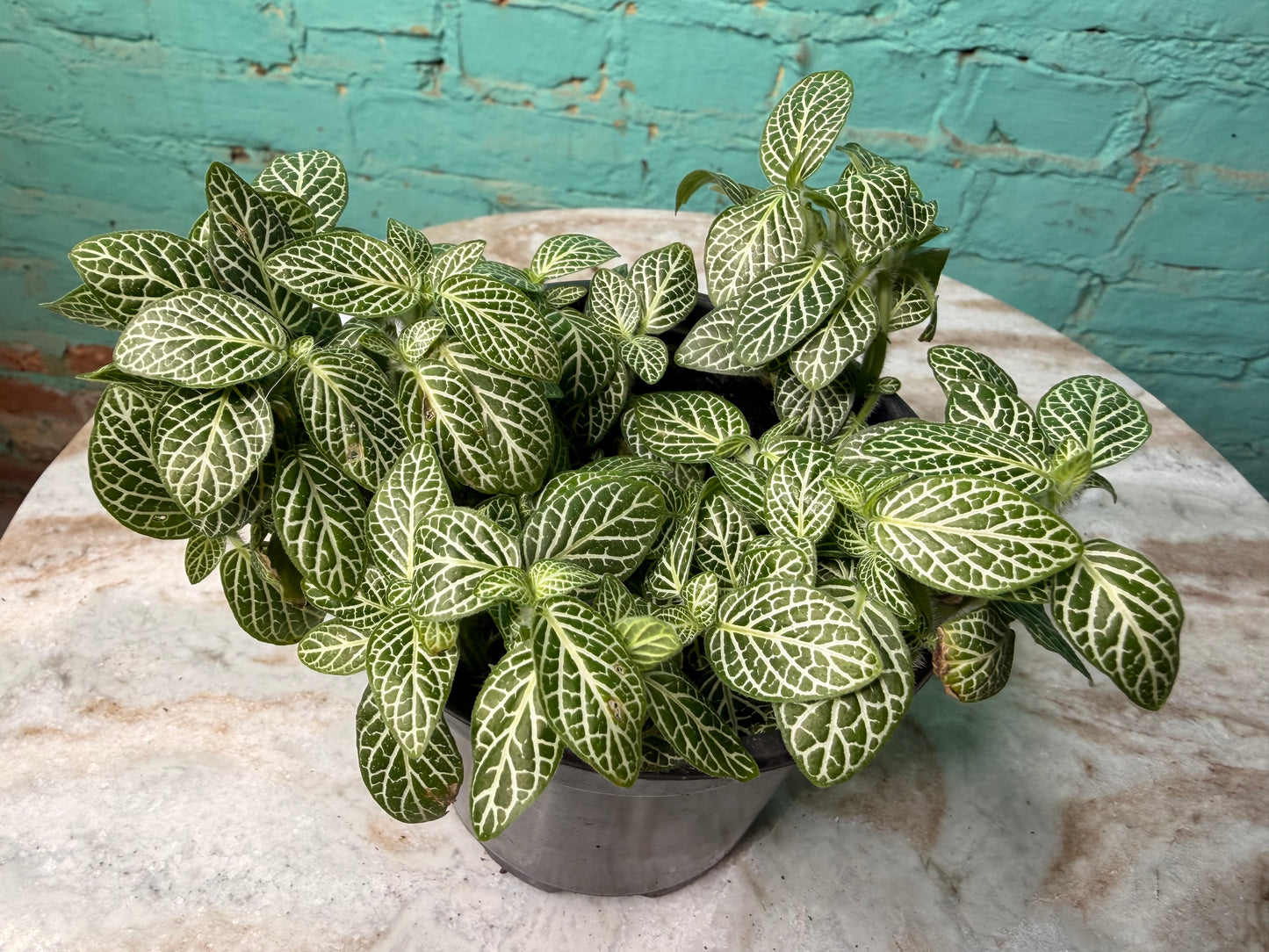
Nerve Plant - Fuzzy Stem Crawling
Each plant is unique. Size, shape, fullness, and variegation will vary.
Couldn't load pickup availability
Nerve plants (Fittonia albivenis) are tropical, humidity-loving growths known for their crispy, dark green leaves paired with spindly veins and nodes of different hues. Other common names include painted net leaf, fittonia, and mosaic plants. Members of the Acanthaceae plant family, they grow plentifully in the rainforests of Peru, Ecuador, and other South American countries.
While they provide ample ground cover in their natural habitat, nerve plants grow best as indoor plants in less humid and hot regions of the world due to their unique climate needs. Some gardeners choose to keep them in small terrariums miniature indoor gardens encased in glass—due to how much climate control and trapped humidity such a small, contained environment allows.
Nerve plants can be a bit temperamental, so you’ll need to care for these tropical plants well to help them survive and thrive. Here are seven key nerve plant care tips:
- 1. Cultivate a humid environment. Nerve plants require high humidity to thrive. If you don’t already live in an extremely humid area, you should consider bringing these plants indoors so you can keep them moist at room temperature. They risk wilting or outright dying otherwise. Use a humidifier or resort to misting your plants regularly as an alternative. Build a small terrarium to allow even more moisture to remain trapped near your plants.
- 2. Exterminate pests. Like many other plants, fittonia leaves are feeding grounds for aphids, gnats, and mealybugs. If you encounter these pests on your plants, use neem oil or another insecticide to eliminate the problem. Prevention is preferable—the healthier you keep your plants and the more you keep an eye on them, the less likely such an infestation will occur in the first place.
- 3. Feed the plants. You should fertilize your fittonia every week, especially if they’re new plants. A regular houseplant fertilizer might be useful in a pinch, but liquid fertilizers designed expressly for tropical plants will prove the most useful.
- 4. Give them the right light. Find a happy medium between constant direct sun and low light to mimic the jungly homelands of your nerve plants. Place them in a sun-facing window if you’re keeping them indoors to expose them to constant bright indirect light throughout the day. If they’re out in your garden, make sure they’re in a shady region that still gets a moderate amount of direct sunlight.
Share

Let customers speak for us
from 763 reviewsThe plants were shipped with such care and came in such great condition! The plants are healthy and as described as ordered. I was nervous to order from a site I’d never seen before but so glad I did and will recommend to all my plant loving friends! 🌱♥️
Rooted Plant Shop handled everything wonderfully!
Epiphyllum Oxypetalum- Queen Of The Night
My plants came perfectly packaged in good shape. Mel is the best she's knows her plants & she knows how to answer questions. She is a good teacher....
Great Experience very knowledgeable with great guides!
This pink lemonade it is stunning! Puctures does no justice!
What a suprise. The plant i ordered was beautiful and so was the suprise plant. Both will make my home lovely. The packaging was great. They secured the plants so that they did not get bounced around.
Gorgeous, healthy plants packed to perfection every time!!! Do not hesitate to purchase from this seller