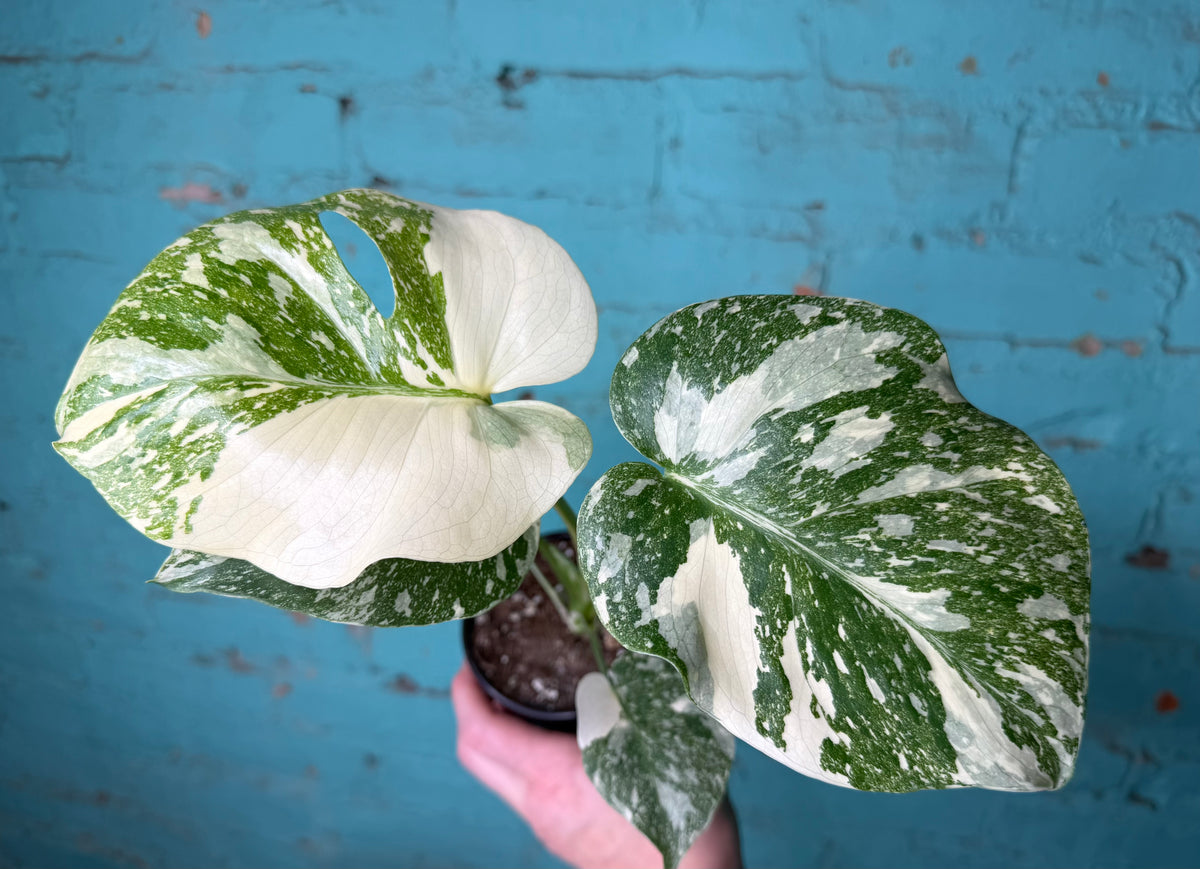
Each plant is unique. Size, shape, fullness, and variegation will vary.
Monstera ‘Crème Brûlée’ is a variegated selection associated with the Thai Constellation line, known for warmer cream, yellow-cream and ivory coloration mixed through green foliage. The pattern can include fine speckling, marbling and larger cream-colored sections, with every leaf developing differently. It is generally described in cultivation as a selection or mutation from Thai Constellation rather than a separate species. The underlying species, Monstera deliciosa, is native to tropical regions of Central America.
This is a true climbing Monstera. Juvenile plants begin with smaller, mostly solid leaves, but the foliage becomes substantially larger as the plant matures. With enough light and vertical support, mature leaves can develop the characteristic splits and interior fenestrations associated with Monstera deliciosa. A sturdy moss pole, plank or other vertical support gives the aerial roots something to attach to and helps the plant develop larger, more mature foliage.
For natural light indoors, place it directly in an east-facing window or approximately 1–2 feet from a south-facing window. It prefers approximately 1,000–2,000 foot-candles at the leaves. Foot-candles simply tell you how much light is actually reaching your plant. The cream portions of the foliage contain little or no chlorophyll, so the green portions are responsible for much of the plant’s photosynthesis. Adequate light supports active growth and maturation, but stronger light does not create more variegation. If new growth begins stretching toward the window, the space between leaves increases or successive leaves become smaller, check the light reaching the leaves and move the plant closer if needed.
Under a grow light, use a full-spectrum 5000–6500K fixture positioned approximately 8–12 inches above the canopy, aiming for the same 1,000–2,000 foot-candles at the leaves. Kelvin describes the color of the light, while foot-candles tell you how much light is actually reaching the plant. Keep the fixture positioned over the growing portion of the plant and raise it as the vine climbs so the newest leaves continue receiving useful light.
Water when your plant needs watered. Allow the root zone to use a good portion of its available moisture before watering thoroughly again. An airy, well-draining mix gives the thick roots access to both moisture and oxygen and allows excess water to move through the pot. How quickly the plant uses water will change with light, temperature, root mass, pot size and active growth, so check the root zone rather than watering according to a calendar.
Watch the newest growth to understand how the plant is responding to its environment. Longer spaces between leaves, smaller new leaves or growth reaching strongly toward the light can indicate that the plant needs more usable light. A root zone that suddenly remains wet much longer than usual tells you that water use has changed and is a reason to look at light, temperature, pot size and root health before watering again. Cream sections can develop cosmetic browning more readily than green tissue because they lack the chlorophyll-containing cells found in green portions of the leaf. Browning alone does not tell you why it happened, so look at the entire growing environment before making changes.
Success looks like strong roots, steady climbing growth, increasingly larger leaves and the gradual development of mature splits and fenestrations. The amount of cream, yellow-cream and green will vary from leaf to leaf, and more cream does not mean a healthier plant. As it matures, watch the progression of several leaves together. Increasing leaf size, shorter spacing between leaves, strong attachment to its support and continued root development are better indicators that the environment is supporting the plant.