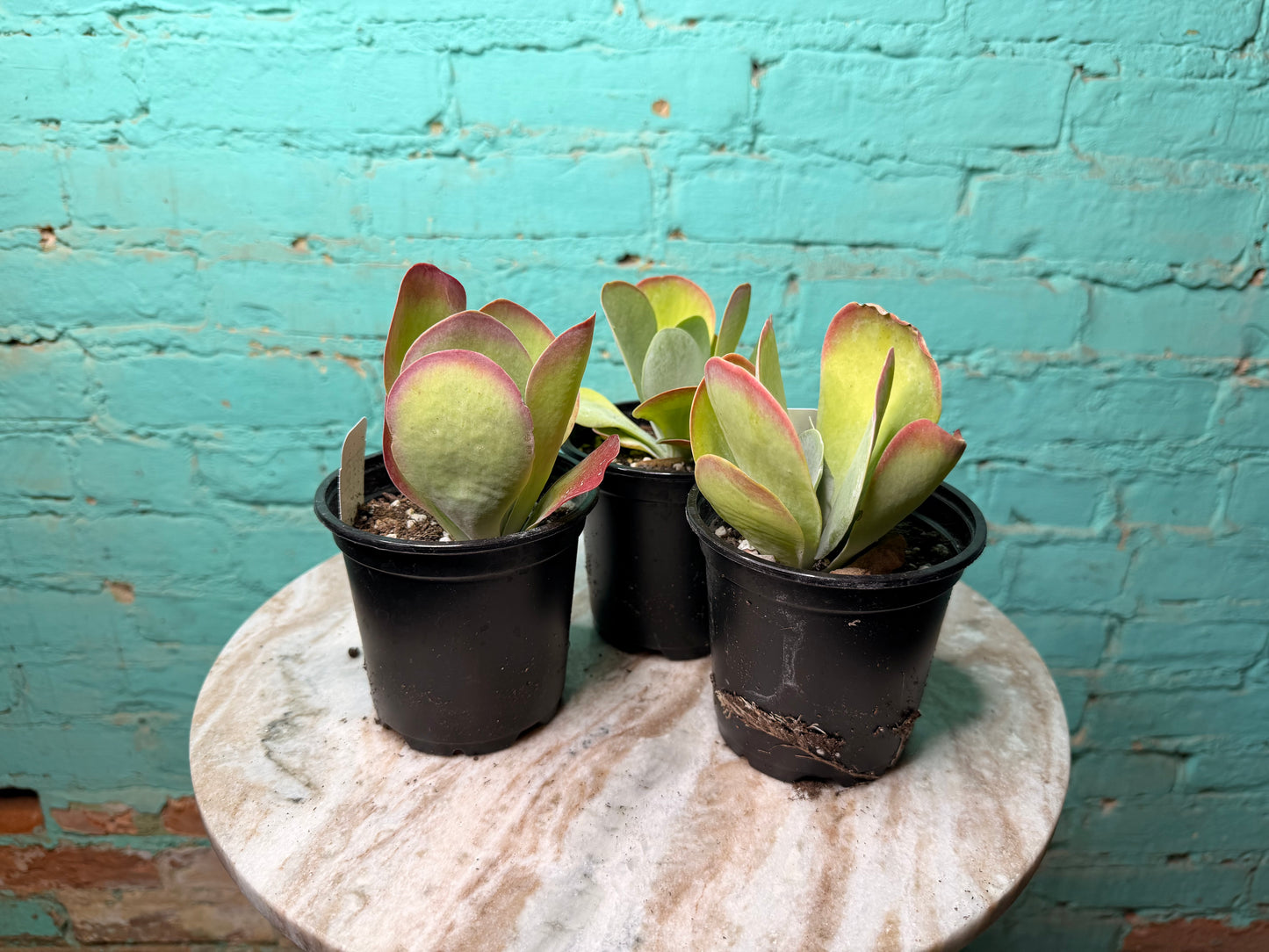
Each plant is unique. Size, shape, fullness, and variegation will vary.
Couldn't load pickup availability
Variegated Flapjack (Kalanchoe luciae ‘Fantastic’ or variegated forms of Kalanchoe luciae) is a striking succulent native to South Africa. It forms broad, paddle-shaped leaves arranged in a flat rosette, with foliage displaying shades of green, cream, yellow, and pink. When exposed to bright light and cooler temperatures, the leaf margins often develop vivid red to crimson tones, creating the colorful “flapjack” appearance for which the plant is known. Mature plants may produce a tall flower stalk with clusters of yellow blooms, although the foliage remains its primary ornamental feature.
Place Variegated Flapjack within 1–3 feet of a south-facing or west-facing window where it can receive several hours of direct sunlight each day. Bright light is essential for maintaining compact growth, vibrant variegation, and the red coloration along the leaf margins. Under grow lights, use a full-spectrum bulb in the 5000K–6500K range. High-output lights should be positioned 8–12 inches above the plant, while medium-strength lights work best at 10–14 inches. Insufficient light often causes the rosette to stretch, the leaves to lose their vibrant colors, and growth to become less compact.
Water when the root zone has dried thoroughly, never on a schedule. Use a chopstick, moisture meter, or clear nursery pot to determine when the roots are ready for water. Plant in a fast-draining mix of equal parts succulent soil, coarse orchid bark, and perlite to provide excellent drainage and airflow. The thick leaves store water, allowing the plant to tolerate extended dry periods. Consistently wet soil is the most common cause of root rot and should be avoided.
Variegated Flapjack communicates through its leaves and growth habit. Firm, upright leaves with bright cream, pink, and red coloration indicate the plant is receiving adequate light. If the leaves become thinner, flatter, or the rosette begins opening with increased spacing between leaves, the plant is asking for more light. Wrinkled leaves signal that the plant has used much of its stored water and is ready to be watered, while yellowing, soft leaves often indicate the root zone is remaining wet for too long. It is normal for the oldest leaves at the base of the rosette to dry and drop as new growth develops from the center.