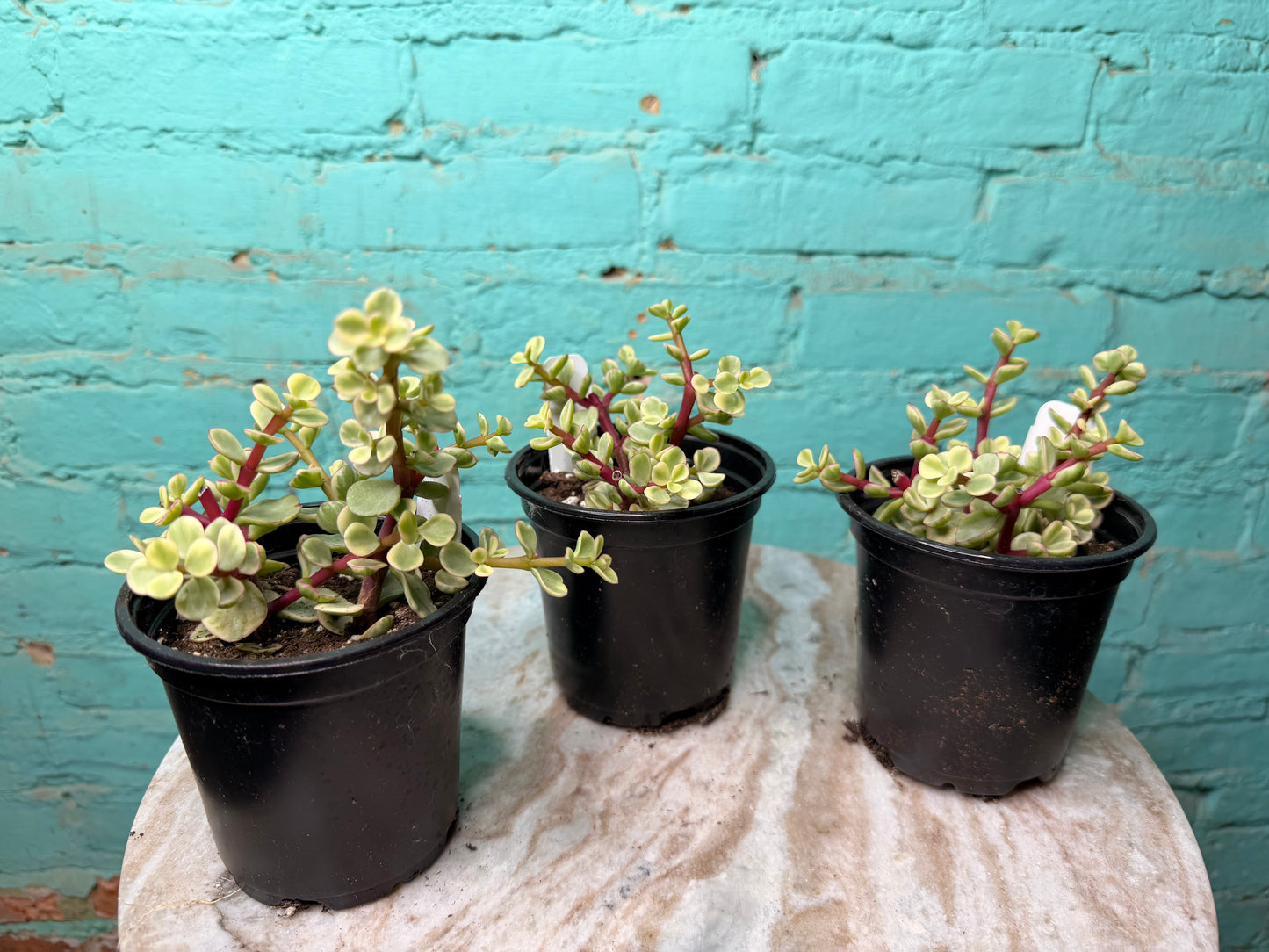
Each plant is unique. Size, shape, fullness, and variegation will vary.
Couldn't load pickup availability
Portulacaria afra ‘Elephant Bush’ is a succulent shrub native to South Africa, where it grows in hot, dry environments as part of the native vegetation. It is recognized by its small, round, fleshy green leaves and reddish-brown stems that become woody with age. Although it resembles a jade plant (Crassula ovata), it is a different species with a finer branching habit and a faster growth rate. Elephant Bush is highly drought tolerant and is commonly grown as a houseplant, bonsai specimen, or landscape plant in warm climates because of its resilience and ease of care.
Place Portulacaria afra within 1–3 feet of a south-facing or west-facing window where it can receive several hours of direct sunlight each day. Bright light promotes compact growth, sturdy stems, and dense foliage. Under grow lights, use a full-spectrum bulb in the 5000K–6500K range. High-output lights should be positioned 8–12 inches above the plant, while medium-strength lights work best at 10–14 inches. In lower light, stems often elongate, leaves become more widely spaced, and growth slows significantly.
Water when the root zone has dried thoroughly, never on a schedule. Use a chopstick, moisture meter, or clear nursery pot to determine when the roots are ready for water. Plant in a fast-draining mix of equal parts succulent soil, coarse orchid bark, and perlite to provide excellent drainage and airflow. The fleshy leaves and stems store water, allowing the plant to tolerate extended dry periods. Consistently wet soil is far more harmful than allowing the mix to dry between waterings and can quickly lead to root rot.
Portulacaria afra communicates through its leaves and growth habit. Firm, plump leaves and strong branching indicate the plant is healthy and actively growing. Wrinkled or slightly flattened leaves signal that the stored water reserves are being used and the plant is ready for water. If stems become long with large spaces between leaves, the plant is asking for more light. Yellowing leaves that drop easily, especially when the soil remains wet, are often a sign that the root zone is staying too moist. As the stems mature and become woody, this is a normal part of the plant’s development and indicates healthy aging rather than decline.