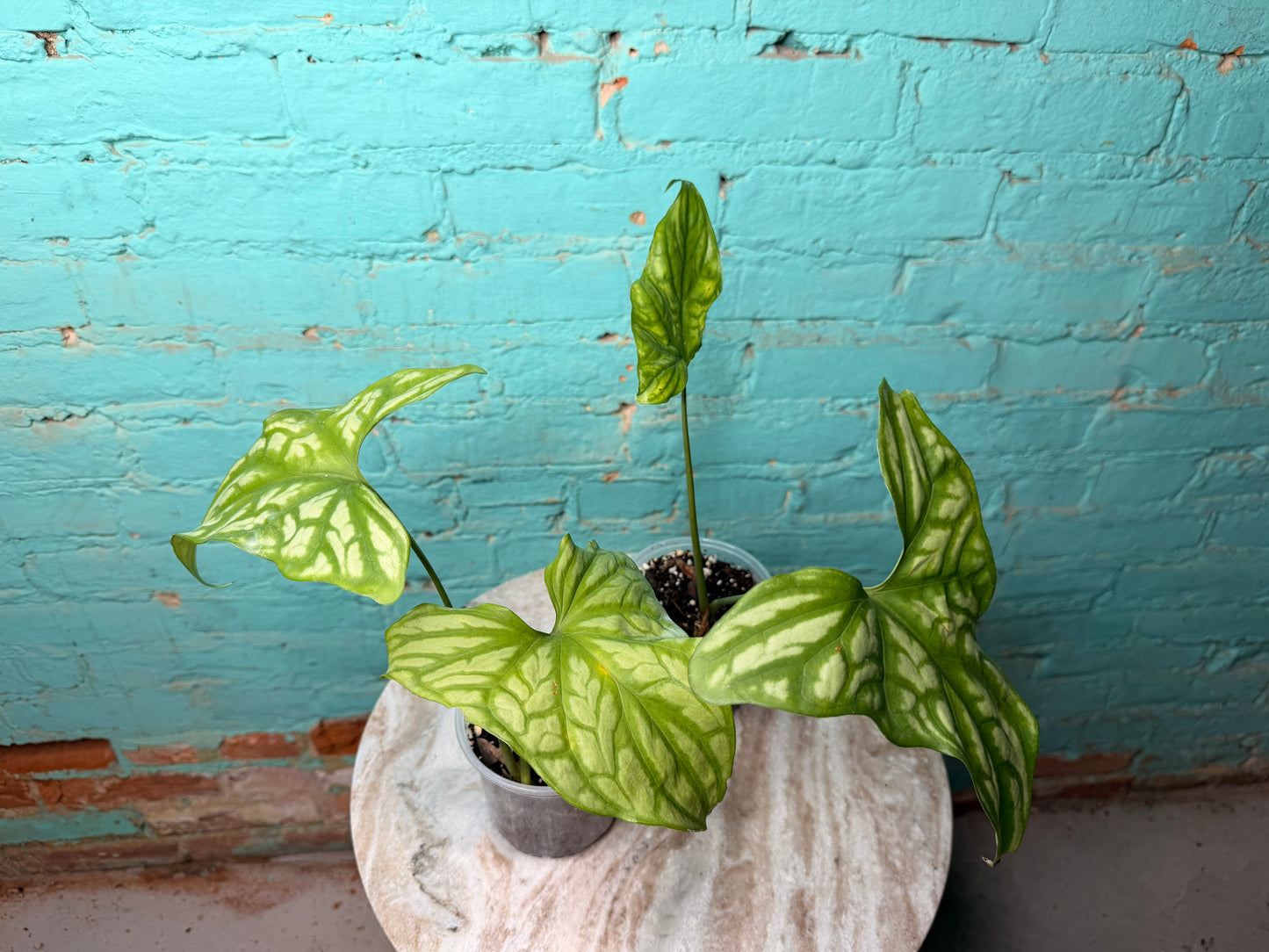
Each plant is unique. Size, shape, fullness, and variegation will vary.
Couldn't load pickup availability
Cercestis mirabilis is a rare climbing aroid native to the tropical rainforests of Nigeria, Cameroon, and surrounding regions. As it matures, the plant undergoes a dramatic transformation from juvenile arrow-shaped leaves to large, deeply lobed adult foliage when given a surface to climb. Its thick, leathery leaves develop a distinctive silvery sheen that contrasts beautifully with the deep green background, making it a highly sought-after collector’s plant. In its natural habitat, Cercestis mirabilis grows beneath the forest canopy, using tree trunks to reach brighter light while anchoring itself with aerial roots.
Place Cercestis mirabilis within 1–3 feet of an east-facing or south-facing window. Bright light encourages larger leaves, stronger silver coloration, and faster maturation, especially when grown on a moss pole or other climbing support. Under grow lights, use a full-spectrum bulb in the 5000K–6500K range. High-output lights should be positioned 8–12 inches above the foliage, while medium-strength lights work best at 10–14 inches. Providing a vertical climbing surface allows the plant to produce significantly larger and more mature foliage than if it is left to trail.
Water when the root zone is approaching dryness, never on a schedule. Use a chopstick, moisture meter, or clear nursery pot to determine when the roots are ready for water. Plant in a well-draining mix of equal parts succulent soil, coarse orchid bark, and perlite to provide excellent drainage while maintaining airflow around the roots. Cercestis mirabilis appreciates consistent moisture but should never remain in saturated soil for extended periods. Maintaining good airflow around both the foliage and root zone supports healthy growth and reduces the risk of root decline.
Cercestis mirabilis communicates through its leaves and growth habit. Larger leaves, shorter spaces between nodes, and increasingly pronounced silver coloration indicate the plant is receiving adequate light and nutrition. If new growth becomes smaller with longer internodes, the plant is asking for more light or a climbing surface. Leaves that lose firmness or begin to curl inward often signal the root zone is becoming too dry, while yellowing leaves accompanied by consistently wet soil may indicate the roots are remaining too moist. As the plant climbs and matures, the leaves naturally become larger and more deeply lobed, making this one of the clearest signs that it is thriving.