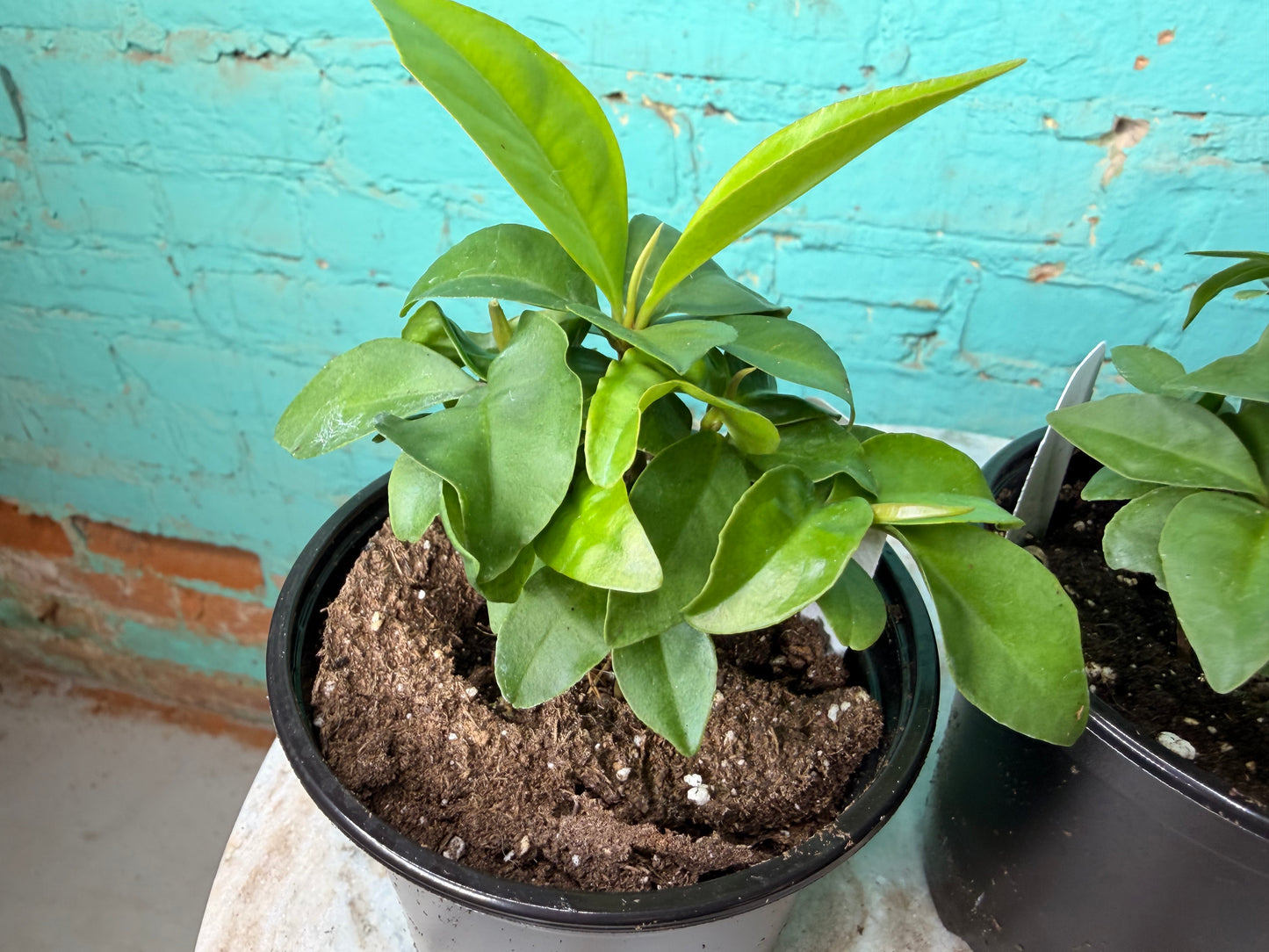
Each plant is unique. Size, shape, fullness, and variegation will vary.
Dischidia nummularia | String of Nickels | Shoebutton Plant
Those tiny, round leaves growing along slender trailing stems are what make Shoebutton Plant so interesting. Also known as String of Nickels, Dischidia nummularia is a tropical epiphyte native to parts of Southeast Asia and the western Pacific. In its natural habitat, it grows attached to trees, with small, fleshy leaves arranged along stems that creep across bark and eventually hang downward. The leaves resemble little green coins or buttons, giving this plant both of its familiar common names. It’s a wonderful choice if you enjoy trailing plants with unusual foliage.
Shoebutton Plant develops long, flexible stems with pairs of small, rounded leaves growing along their length. Young plants may start out fairly compact, but as they mature, the stems extend and begin cascading over the sides of their container. Under favorable conditions, established plants can develop trails several feet long. The foliage remains small even as the plant matures, creating a delicate curtain of overlapping green leaves. It can also produce tiny, pale flowers along the stems, although its distinctive trailing foliage is the main attraction.
For natural light, place it approximately 1–2 feet from an east-facing window or 2–4 feet from a south-facing window, adjusting for the strength of direct sunlight. Aim for approximately 800–1,500 foot-candles at the leaves as a practical indoor growing range. Foot-candles simply tell you how much light is actually reaching your plant. Enough usable light supports steady stem growth and closely spaced leaves. If the new growth develops longer gaps between leaves, evaluate how much light is reaching the plant. Avoid abruptly exposing foliage grown in sheltered conditions to intense afternoon sunlight.
Under a grow light, use a full-spectrum 5000–6500K fixture positioned approximately 8–12 inches from the foliage, adjusting the distance to maintain around 800–1,500 foot-candles at the leaves. Kelvin describes the color of the light, while foot-candles tell you how much light is actually reaching the plant. As the stems lengthen, consider how much light reaches the trailing portions rather than measuring only at the top of the container.
Water when your plant needs watered. The small, fleshy leaves store some moisture, and the plant’s epiphytic roots appreciate a growing environment with excellent airflow. A loose mixture of fine orchid bark, coarse perlite and a modest amount of moisture-retentive potting soil or sphagnum moss works well. Allow the root zone to dry partially before watering thoroughly again, checking moisture through the container rather than following a fixed schedule. Shoebutton Plant can also be grown mounted on bark or wood, where its stems can spread naturally across the surface. Mounted plants may need more frequent watering because their roots dry more quickly.
Pay attention to the newest leaves and the firmness of the stems. Healthy growth produces small, plump leaves arranged closely along flexible trailing stems. Some slight wrinkling can indicate that the plant has used its available moisture, while persistent yellowing, soft stems or deteriorating roots are reasons to evaluate watering and drainage. If the stems continue extending but produce fewer leaves, check the amount of usable light reaching the growing tips.
Success looks like healthy, branching stems covered in small, rounded leaves and increasingly long trails spilling over the container. With enough usable light and an airy root zone, Shoebutton Plant gradually develops into a beautiful cascading display of tiny green buttons. Its unusual epiphytic growth habit and delicate foliage make it especially appealing in hanging planters, on shelves or as part of a collection of trailing tropical plants.