The Rooted Plant Shop
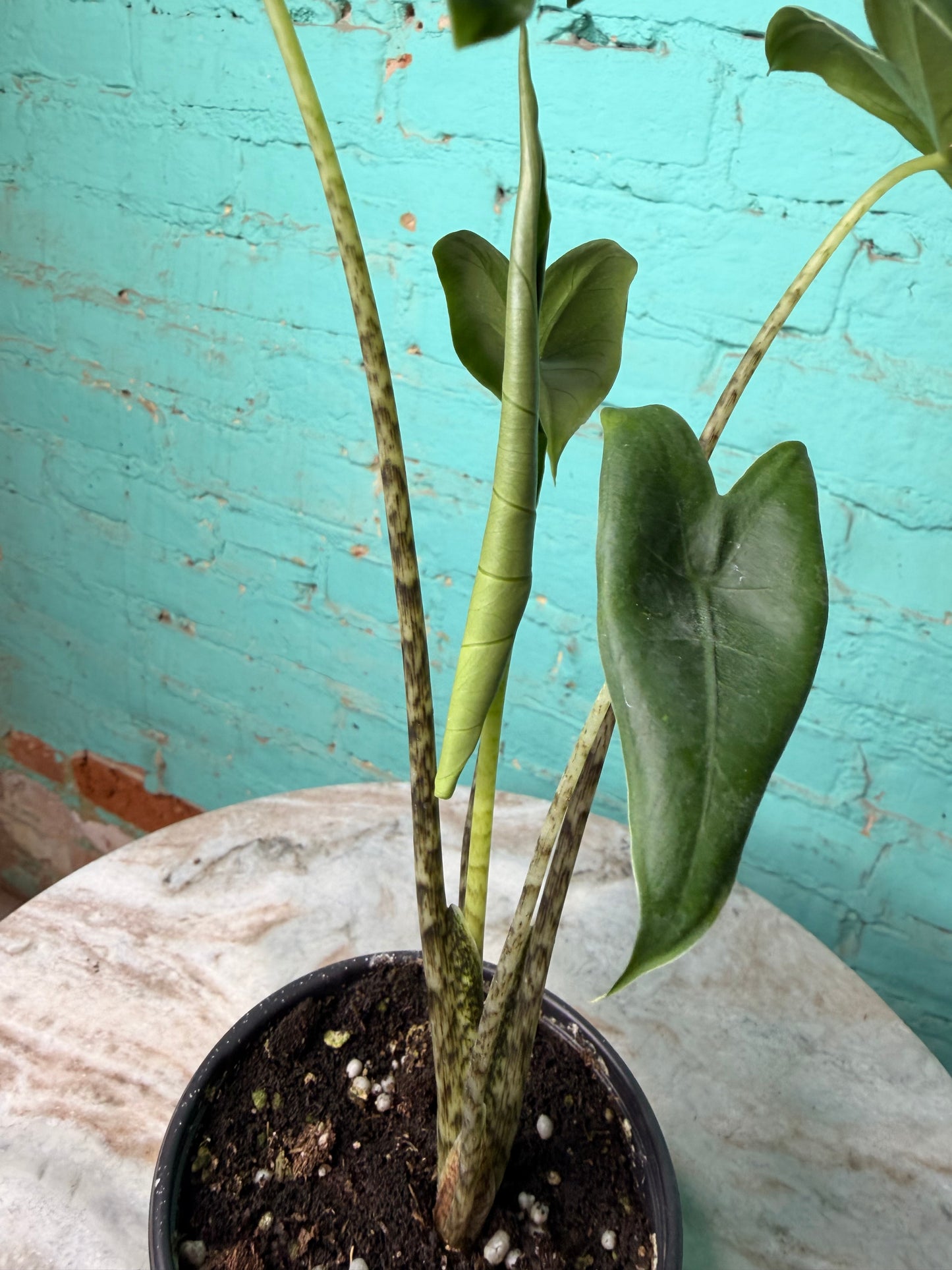
Alocasia-Zebrina 4”
Alocasia-Zebrina 4”
Couldn't load pickup availability
Alocasia, commonly known as elephant's ear, is a striking tropical plant that needs warm, humid conditions, and is usually grown as a houseplant. It is prized for its large heart-shaped or arrow-shaped leaves and the foliage of some varieties has prominent veins or variegation. In the summer, alocasia grows quickly, producing a new leaf every week.
Most Alocasias thrive in bright and indirect light or partial shade outdoors, which prevents their leaves from scorching. The light intensity and length depend on the species or cultivar. Some large varieties tolerate full direct sunlight, and their leaf color tends to be more defined.
Generally, a location in or near a window with an eastern or western exposure offers the filtered light many species require. Some alocasia will tolerate a shadier spot in your home, but the leaf growth might be slower and less impressive.
Plant alocasia in a loose, well-drained potting mix. The soil should be slightly acidic, with a pH between 5.5 and 6.5. Use a standard all-purpose peat-based potting mix or special potting mix for aroids. If necessary, improve the soil drainage by amending the mix with orchid bark or perlite.
Alocasias are water-loving plants but allow the top few inches of soil to become nearly dry before watering. This will help keep the soil evenly moist. Soggy soil makes the plant susceptible to fungal infections and root rot.
They require less water during the winter months when the plant is dormant. Alocasia does not tolerate temperatures below 60°F and requires very humid environments. To raise the humidity around your plant, place it on a pebble tray and add water until it rises to just below the pebble surface. Keep the plant away from cold drafts from windows, doors, and air conditioning.
Especially larger specimens are heavy feeders. During the growing season, use a balanced houseplant fertilizer, such as 20-20-20, either in liquid form diluted to half-strength, once or twice a month, or in granular slow-release form every six weeks to two months. Stop feeding your alocasia during its dormant phase in the winter.
Share

Let customers speak for us
from 373 reviewsThe way they wrap the plant in the insulation, it creates a tube of warmth for the plant with the heat pack at the bottom.
This is so fun! I received choices on how I would get my plants! 🌱 The one that was sent was perfect along with a cactus and another cute succulent! She has helped me with so many plant issues! Thanks Mel for being an amazing small business!
Everything came beautifully packaged and in such good shape. Thank you!!
I love the way Rooted plant shop wrapped up the plants n tight so they can get here in one piece. Mel also likes to educate us on plants. She makes it really easy helps us of how to take care of the plants. Thank u very much Mel for everything u do for us bottom from my heart. I appreciate u
Shipping was so fast. The plant was so safe and secure when it arrived. Mel is so great, and so knowledge. Never had a disappointing purchase.
The rooted plant shop is impeccable. I am and will continue to be a returning customer. Seller/owner very professional and very knowledgeable in her field of plants. Packaging is packed with great care.. fast shipping as well.. and the plants are as described, healthy and gorgeous!
I bought a Dieffenbachia from Mel she’s beautiful. The third leaf is just now coming out. I can’t be more happier with her.
The Spanish moss from The Rooted Plant Shop are ABSOLUTELY STUNNING!!! Incredibly healthy and full!! So happy and can’t wait for more to be stocked!!