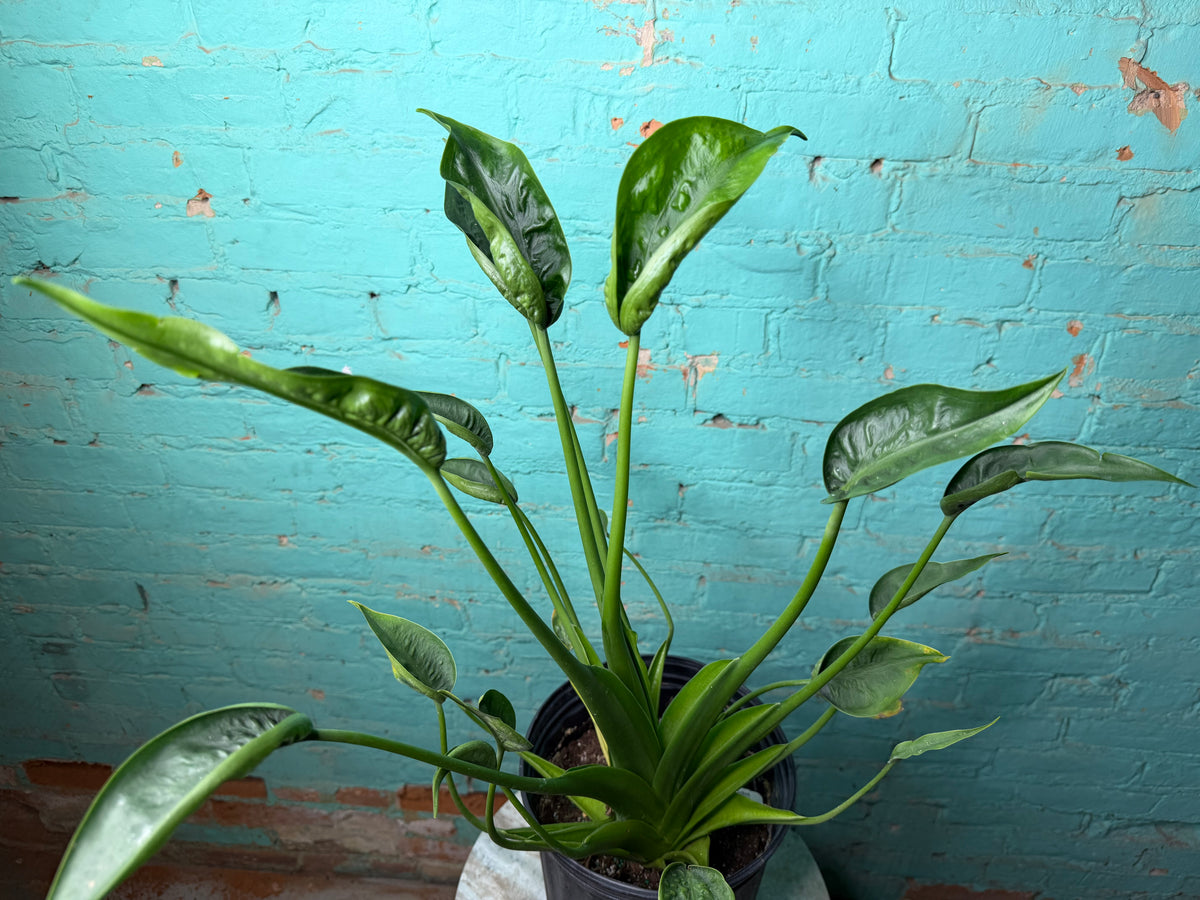
Each plant is unique. Size, shape, fullness, and variegation will vary.
Alocaisa Tiny Dancer
Small, cupped green leaves sit at the ends of long, slender petioles, giving this Alocasia its distinctive light, dancing appearance. This compact hybrid was created by LariAnn Garner from Alocasia brisbanensis × Alocasia odora and was selected for its smaller stature and abundant foliage compared with its much larger parents. Rather than developing the oversized elephant-ear leaves associated with many Alocasias, it stays compact while continually building a full cluster of small leaves at different heights and angles.
Growth comes from an underground corm, with new leaves emerging individually from the center of the plant. It generally matures around 14–20 inches tall, and established plants can develop additional corms and offsets around the base, creating an increasingly full appearance. The long, slender petioles and small leaves are part of its natural growth habit rather than immature characteristics it will eventually outgrow. It does not climb and does not need a moss pole or other support.
For natural light indoors, place it directly in an east-facing window or approximately 1–2 feet from a south-facing window. It prefers approximately 800–1,500 foot-candles at the leaves. Foot-candles simply tell you how much light is actually reaching your plant. Enough usable light supports active growth and continued leaf production. Because naturally long petioles are part of this plant’s appearance, watch for a change in growth rather than petiole length alone. Increasingly weak or stretched new growth, strong leaning toward the window or progressively smaller leaves can indicate that the plant needs more light.
Under a grow light, use a full-spectrum 5000–6500K fixture positioned approximately 8–12 inches above the canopy, aiming for the same 800–1,500 foot-candles at the leaves. Kelvin describes the color of the light, while foot-candles tell you how much light is actually reaching the plant. Keep the fixture above the canopy and raise it as the plant grows so the newest leaves continue receiving useful light.
Water when your plant needs watered. During active growth, it can use moisture relatively quickly, but the roots and corm still need oxygen. Allow the plant to use some of the available moisture before watering thoroughly again rather than keeping the root zone continuously saturated or allowing it to repeatedly become severely dry. Use an airy, well-draining mix that retains some moisture while leaving plenty of space for oxygen around the roots and corm. How quickly the plant uses water will change with light, temperature, root mass, pot size and active growth, so check the root zone rather than watering according to a schedule.
Watch the newest growth and the root zone together. New leaves should continue emerging from the center while established foliage remains firm. If successive leaves become smaller, new petioles become noticeably weaker than previous growth or the plant begins reaching strongly toward its light source, check how much light is actually reaching the leaves. If the root zone suddenly remains wet much longer than usual, look at changes in light, temperature and active growth before adding more water. An older leaf declining as new growth develops can also be part of the plant’s normal growth cycle.
Success looks like steady production of small, cupped leaves on slender petioles, healthy roots and an increasingly full plant as the corm continues growing and producing offsets. This cultivar is meant to remain compact, so larger leaves are not the goal. Watch for consistent new growth, firm foliage and continued development from the center and base of the plant.