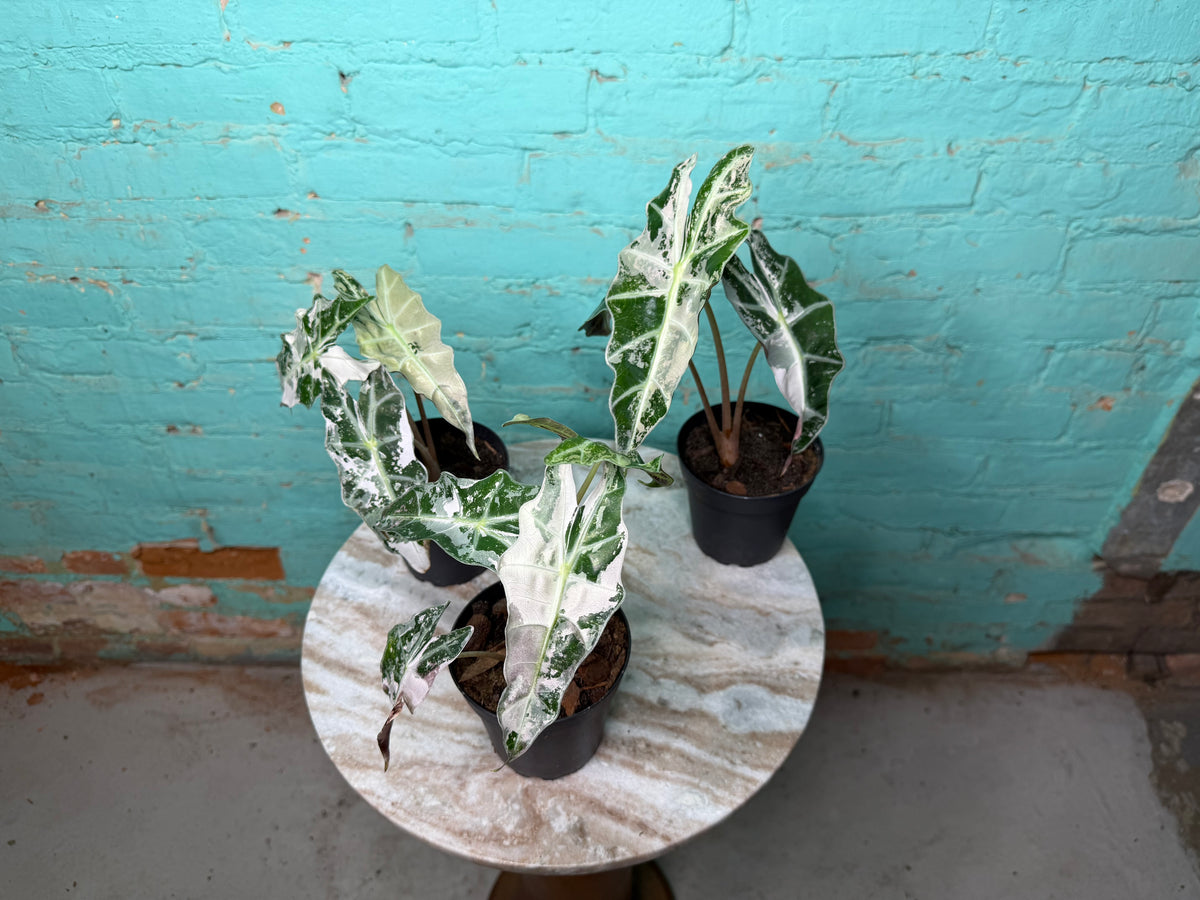
Each plant is unique. Size, shape, fullness, and variegation will vary.
Alocasia ‘Pink Polly’ is a variegated form of the compact ‘Polly’ cultivar, with dark green, arrow-shaped leaves, deeply scalloped edges, prominent pale veins and variegation that can appear in shades of pink, cream and pale green. ‘Polly’ comes from a cultivated Alocasia lineage rather than a naturally occurring species and traces back to Alocasia longiloba and Alocasia sanderiana. The amount and placement of variegation can change with every new leaf, so individual plants can look very different from one another.
This is an upright Alocasia that grows from a corm rather than a climbing or trailing stem. New leaves emerge individually from the center, and established plants can produce additional corms and offsets around the base. It remains relatively compact compared with many larger Alocasias, but the leaves can become increasingly substantial as the plant develops a stronger root system and mature corm. It does not need a moss pole or other climbing support.
For natural light indoors, place it directly in an east-facing window or approximately 1–2 feet from a south-facing window. It prefers approximately 800–1,500 foot-candles at the leaves. Foot-candles simply tell you how much light is actually reaching your plant. The pink and cream portions of the foliage contain less chlorophyll than the green portions, so enough usable light is important for supporting active growth. Stronger light does not create more pink or determine where the variegation appears. If new petioles begin stretching toward the window or successive leaves become smaller, check the light reaching the leaves and move the plant closer if needed.
Under a grow light, use a full-spectrum 5000–6500K fixture positioned approximately 8–12 inches above the canopy, aiming for the same 800–1,500 foot-candles at the leaves. Kelvin describes the color of the light, while foot-candles tell you how much light is actually reaching the plant. Keep the fixture above the canopy rather than primarily lighting the plant from the side, and raise it as the plant grows so the newest leaves continue receiving useful light.
Water when your plant needs watered. During active growth, this Alocasia can use moisture relatively quickly, but its roots and corm still need oxygen. Allow the plant to use some of the available moisture before watering thoroughly again rather than keeping the root zone continuously saturated or allowing it to become severely dry. An airy, well-draining mix that holds some moisture while leaving space for oxygen around the roots and corm works well. Water use can slow when light levels, temperatures or active growth decrease, so let the plant and root zone determine when it is time to water rather than following a schedule.
Watch the newest growth for changes in the plant’s environment. A new leaf that is larger than the previous one is a good indication that the plant has enough resources to continue developing. Progressively smaller leaves, longer petioles or growth reaching strongly toward the light can indicate that it needs more light. If the root zone suddenly remains wet much longer than usual, the plant may be using less water because of a change in light, temperature or active growth. New leaves emerge soft and tightly rolled, then expand and strengthen as they harden, and an older leaf declining while a new one develops can be part of the plant’s normal growth cycle.
Success looks like steady new leaves, firm petioles, healthy roots, an established corm and leaves that maintain or increase in size as the plant matures. The amount of pink, cream and green will naturally vary from leaf to leaf, and more pink is not a measure of a healthier plant. Watch the progression of several leaves over time. Strong new growth, increasing leaf size and continued root and corm development are better indicators of how well the plant’s environment is supporting it.