Skip to product information
1 of 4

The Rooted Plant Shop

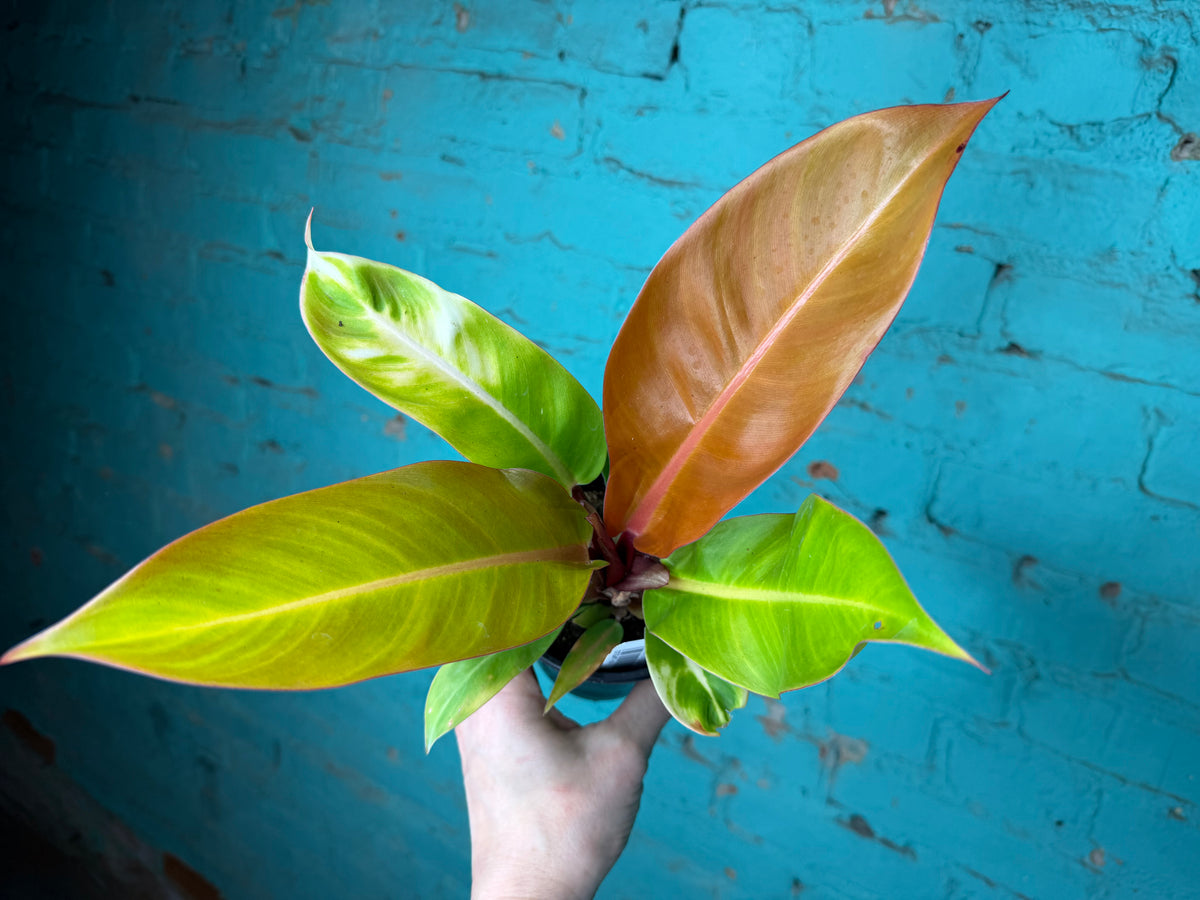
Philodendron Prince Of Orange 4”

Philodendron Prince Of Orange 4”

Regular price $19.00 USD
Regular price Sale price $19.00 USD
Sale Sold out
Shipping calculated at checkout.

Each plant is unique. Size, shape, fullness, and variegation will vary.

Shipping & Cold Weather Protection

Rooted ships live plants on Mondays and Tuesdays to help prevent plants from sitting in shipping facilities over the weekend.

Shipping speed matters, especially during colder weather. I strongly recommend expedited shipping and appropriate heat-pack protection based on the temperatures your plants will travel through.

Please review Rooted's shipping guidelines before selecting your delivery method. Choosing the least expensive shipping option may increase the risk of temperature exposure and transit delays.

Shipping Large Plants (8"–14")

For safe travels, plants in 8-inch through 14-inch pots must be purchased in a separate order from smaller plants and other items. Due to their size, these plants require individual packaging and shipping to help ensure they arrive safely.

Read Rooted's Shipping Policy

Philodendron ‘Prince of Orange’

The changing color of each new leaf is what gives this Philodendron its character. Fresh growth can emerge in vivid orange to coppery-orange tones, gradually transition through bronze and yellow-green, and eventually mature to green. Because leaves develop at different times, an actively growing plant can carry several colors at once. ‘Prince of Orange’ was bred as a compact, self-heading Philodendron, giving it that progression of colorful foliage without developing the long trailing vines associated with many other Philodendrons.

Growth stays relatively compact and upright, with new leaves emerging closely around a central stem. Young plants can appear almost rosette-like, while the central stem becomes more apparent as the plant matures and aerial roots may develop around the nodes. Leaves become broader and more substantial as the plant establishes. It does not require a moss pole to develop its characteristic form, although an older, heavier stem may eventually appreciate physical support.

For natural light indoors, place it 1–3 feet from an east-facing window or 2–4 feet from a west-facing window. It prefers approximately 800–1,500 foot-candles at the leaves. Foot-candles simply tell you how much light is actually reaching your plant. The lower end of this range can support healthy growth, but you may not see the same intensity or duration of the orange and copper tones that new foliage can develop with stronger usable light. Light does not create the cultivar’s color, but it can influence how strongly that color is expressed. If successive leaves become smaller, spacing along the stem begins increasing or the plant starts leaning strongly toward the window, move it closer to its light source.

Under a grow light, use a full-spectrum 5000–6500K fixture positioned approximately 8–12 inches above the canopy, aiming for 800–1,500 foot-candles at the leaves. Kelvin describes the color of the light, while foot-candles tell you how much light is actually reaching the plant. If color is an important part of why you’re growing this cultivar, aim toward the middle to upper portion of that range rather than keeping it at the lowest usable intensity. Keep the fixture above the newest growth and raise it as the canopy develops. If new leaves are becoming progressively smaller despite continued growth, measure the light at leaf level to determine whether the plant is actually receiving enough usable light.

Water when your plant needs watered. Allow it to use a good portion of the available moisture before watering thoroughly again, but repeatedly swinging between extremely dry and saturated conditions can be particularly noticeable in the newest growth. Use a loose aroid mix with potting material for some moisture retention combined with chunky bark and perlite or pumice to create air space around the roots. A healthy root system with access to both moisture and oxygen gives developing leaves the resources they need while they are forming and expanding.

Pay particular attention to how the newest leaves emerge. These self-heading Philodendrons can occasionally produce a leaf that curls, becomes cramped or remains partially trapped in the cataphyll instead of expanding cleanly. If it happens repeatedly, look at the plant’s recent conditions rather than assuming humidity is automatically the problem. Large swings in moisture, a root system under stress, changes in water use, insufficient usable light or an environment that allows tender emerging tissue to dry too quickly can all affect developing growth. Avoid pulling or peeling a stuck leaf open because the soft tissue can be damaged easily. A single imperfect leaf can happen, but repeated small, distorted or poorly unfurling leaves are a reason to investigate what has changed.

Success looks like compact growth, healthy roots and new leaves that emerge and expand cleanly before moving through their characteristic orange, bronze and green color progression. As the plant establishes, successive leaves should remain substantial rather than becoming progressively smaller. Watch the direction of several new leaves together. Increasing leaf size, close spacing, strong color and smooth new growth tell you far more about the plant’s current environment than expecting every individual leaf to be perfect.

GROW WITH ROOTED: Learn how lighting, watering, root development, and pest management influence the growth and health of your plants. Explore the Rooted Plant Care Library

View full details