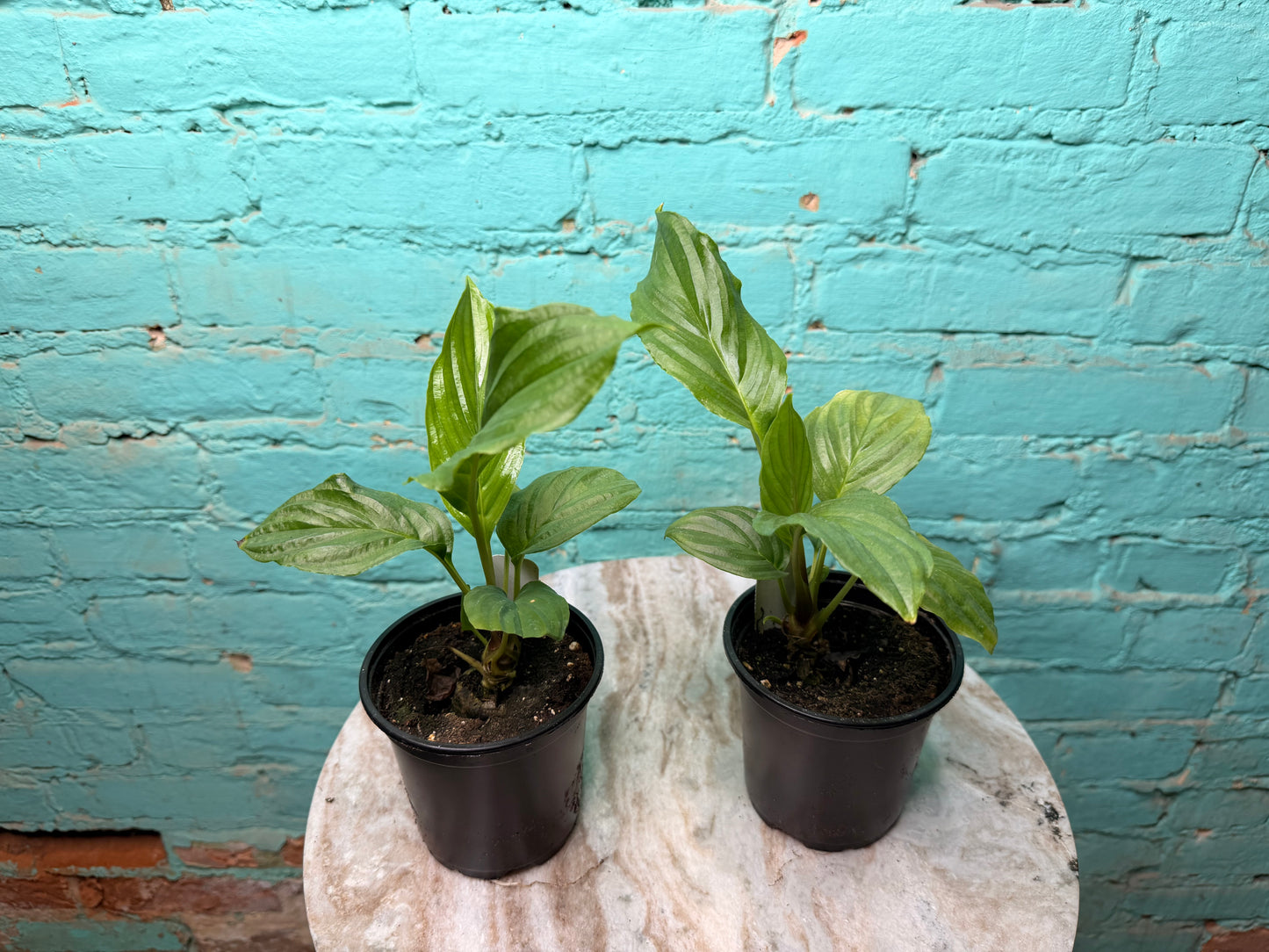
Each plant is unique. Size, shape, fullness, and variegation will vary.
Tacca chantrieri is a tropical flowering plant known for its unusual dark purple to nearly black flowers surrounded by broad, wing-like bracts and long threadlike structures that can extend well beyond the flower. Those features give the bloom its bat-like appearance and the common names Black Bat Flower and Bat Plant. Native from northeastern India through southern China and Southeast Asia, it naturally grows in warm, wet tropical environments beneath filtered forest light.
This plant grows from an underground rhizome and produces large green leaves on individual upright stalks, gradually developing into a full clump rather than a vine or climbing plant. Mature plants can reach approximately 2–3 feet tall and wide indoors when given enough warmth, moisture and growing space. Flower stalks emerge from established growth, with the dramatic bracts and long hanging filaments developing above the foliage. It does not need a moss pole or other climbing support.
For natural light indoors, place it directly in an east-facing window or approximately 2–4 feet from a south-facing window. Aim for approximately 500–1,000 foot-candles at the leaves. Foot-candles simply tell you how much light is actually reaching your plant. This species naturally grows in filtered tropical light rather than exposed full sun. If new leaves become progressively smaller, stalks begin stretching strongly toward the window or growth becomes increasingly weak and open, check the amount of light reaching the leaves and move it closer if needed.
Under a grow light, use a full-spectrum 5000–6500K fixture positioned approximately 10–14 inches above the canopy, aiming for the same 500–1,000 foot-candles at the leaves. Kelvin describes the color of the light, while foot-candles tell you how much light is actually reaching the plant. Keep the fixture above the foliage and raise it as the plant grows so the newest growth continues receiving useful light.
Water when your plant needs watered. Unlike plants that store substantial water and benefit from a significant dryback, this species comes from a wet tropical environment and prefers a root zone that retains some moisture while still allowing oxygen around the rhizome and roots. Do not intentionally allow the entire pot to become severely dry between waterings. An airy mix containing organic material along with coarse bark, perlite or similar ingredients can provide moisture retention without leaving the rhizome sitting in dense, saturated soil. Warm temperatures are also important because growth and water use can slow when the plant becomes cool.
Watch the foliage and root zone together. Drooping or loss of firmness can tell you the plant is using available moisture, while a pot that remains saturated for an unusually long time can indicate that the roots are using water more slowly than expected. Progressively smaller or stretched new growth is a reason to evaluate available light. Browning edges can have several causes, including changes in moisture, humidity or root function, so use them as a reason to look at the entire environment rather than as a diagnosis by themselves.
Success looks like firm new foliage, an expanding rhizome and increasingly full growth from the base. Once established and actively growing, the plant can produce its distinctive dark flower structures above the foliage. Consistent warmth, usable filtered light and a root zone that remains lightly moist without staying waterlogged support both foliage growth and flowering.